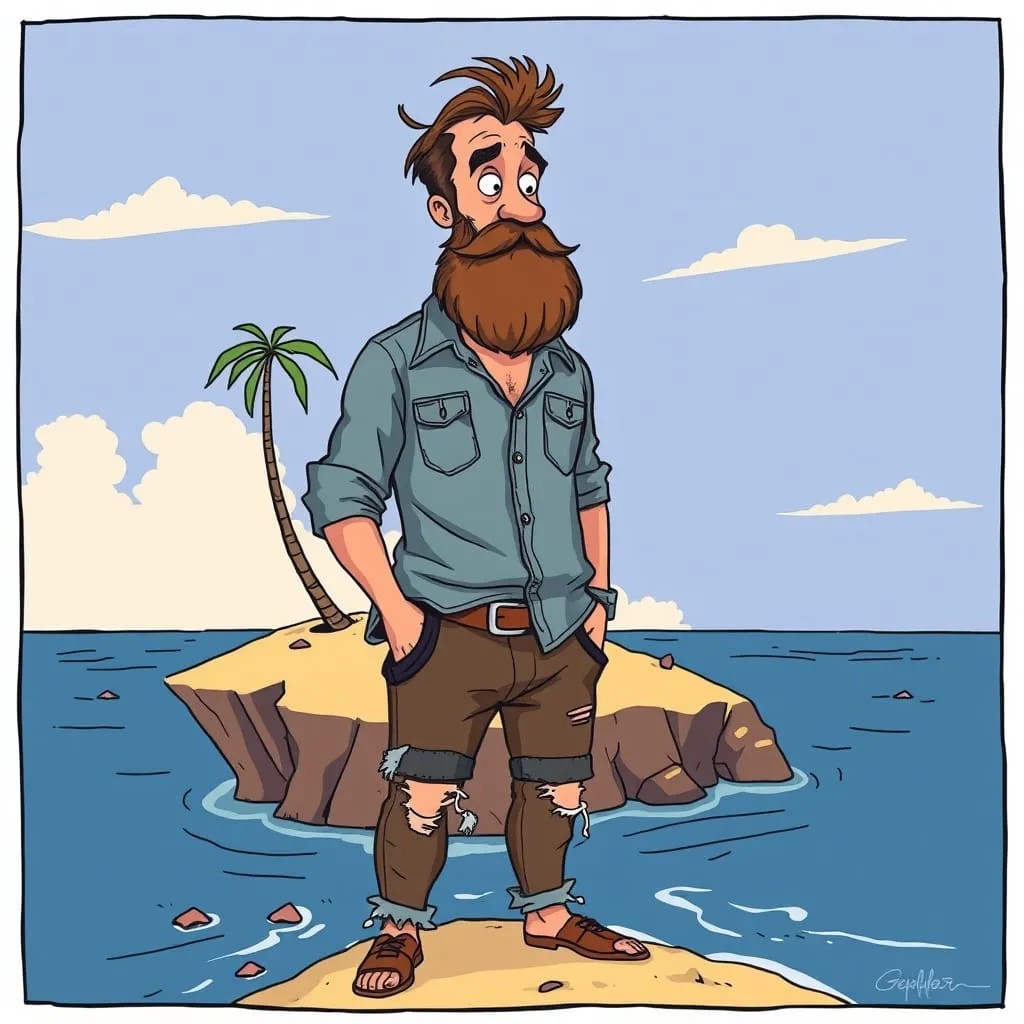
I've often asked myself the question: how "Irish" is Ireland when it comes to everyday life?
Everyday life has always been my benchmark for evaluating pretty much everything; nationality, poetry, religion, and so forth. For instance, when I started writing poetry seriously (around the age of seventeen), I only allowed myself the most mundane subjects: swimming pools, traffic islands, waiting rooms, and the like. That seemed like the most challenging place to find poetry, but also the most meaningful.
Although I've always been on the side of "re-enchanting" modern society, I've also felt that this has to be on the level of the everyday, or else it's meaningless.

But what is "everyday life"? That's an interesting question.
Everyday life for a high-security prisoner, or for someone working on an oil rig, is very different to everyday life for a taxi-driver or a housewife. Everyday life was also very different during the Covid lockdowns than it is right now. The idea of "everyday life" would make an interesting blog post in itself. It's not this one. Let's just assume everyday life is what happens on a weekday (and weeknight) for an Irish person living in an ordinary town, city or suburb.
So, what would be distinctively Irish about this person's everyday experience? I've decided to examine it under headings.
1) Language
The vast majority of Irish people speak the English language exclusively. Interactions between strangers are always in English, outside special contexts. So in this we wouldn't differ from all the Anglophone countries in the world. (I'm just talking about language here, not accent or dialect.)
When we look at nationality from the viewpoint of everyday life, it's clear why the promotion of the Irish language was the top priority for the Gaelic Revival, and indeed for the new Irish state-- and it's also clear why its failure was so lamentable. Language surrounds us every single day. Nothing else is so all-embracing.

The sad truth is you won't hear any Irish in Ireland, outside the Gaeltachts and Irish language schools. You could walk around Dublin city centre all day and hear every language except Irish. This is not just me exaggerating. I've asked immigrants who've been in Ireland for several years if they've ever heard anyone speaking Irish. The answer has always been "No."
It's not even used for greetings or pleasantries. I've sometimes forced myself to say "go raibh maith agat" (thank you) to shop assistants, but it feels awkward and strange.
Of course, we do have bilingual signage, and bilingual announcements on public transport. This might be denounced as tokenism, and I expect it will come under increase criticism in the future. But it's better than nothing, and indeed it's very visible (and audible).
The use of the Irish language on things like coffee mugs and welcome mats (Céad Míle Fáilte) is fairly common.
2) Physical appearance
I've never been convinced that there's a distinctive Irish physical appearance. We have a lot of redheads, famously, but I don't think there's so many that you'd notice. We are said to be especially pale, but I don't think that's especially noticeable either.
I've heard people say this or that person looks Irish, and I've sometimes thought it myself. When I've thought this, it has to do with the lips especially, though it would be hard to describe. I don't think there's any generally-agreed concept of what physical features make someone look Irish.

A colleague of mine once said that she knew when she came to the boarding gate for Dublin, in an international airport, because everybody was suddenly uglier. Make of that what you will!
3) Clothes
I'm doubt Irish people dress any differently than people in neighbouring countries, or even in most of the developed world. It's not like you see a lot of people walking around in Aran sweaters. There is a student in UCD who always wears a kilt, but he has an American accent. We mostly stick to the international uniform of jeans, sports shoes, and sweaters-- that sort of thing.

Of course, quite a lot of people wear t-shirts or hoodies that proclaim some kind of loyalty, interest or hobby. Sometimes this is Irish in nature. A fair amount of people wear GAA jerseys.
Some conservatives disdain t-shirts (or any clothing with writing on it) but I like them for this very reason-- the potential for distinctiveness.
4) Food and drink
Again, I'm not sure that the food and drink you'll encounter in everyday Irish life will be at all distinctive, although this category is a bit more promising than the others so far.
It's said that Irish people are dedicated tea-drinkers, which we are (along with the English). However, I think that even this is receding, as coffee culture becomes more engrained (pun fully intended). I didn't even know what a latté or a cappuccino was when I was growing up. Now, I'll admit, I drink more coffee than tea, partly because coffee doesn't have to draw and I like my tea strong.
The full Irish breakfast is really just the full English breakfast, and I doubt anyone would have it except on a Sunday morning.

We do eat a lot of potatoes, though. And in recent years, Irish cuisine has thrown up the Spice Bag-- pun once again intended. (Actually, this innovation delights me.)
There are, however, some distinctively Irish biscuits (cookies, for any Americans reading).
5) Personal Names
I think is actually the first category where there's a meaningful difference between Ireland and other Anglophone countries.
Irish personal names are very popular. There will be no classroom, office, or rugby squad where you won't encounter names such as Sinéad, Conor, Rory, Aisling, Cormac, Brendan, Deirdre, etc. etc.
My rough guess is that about a quarter of Irish people have distinctively Irish names.
Indeed, Irish parents seem to be pushing the boat out more and more in this regard, with previously-rare names such as Étain, Síofra, and Ultan becoming quite ordinary.

There are also distinctive Irish nicknames, such as Packie for Patrick (rural) and Git for Christopher (urban). Don't ask me to explain the second one there.
This seems to be a lasting legacy of the Gaelic Revival. A hundred years ago, Irish personal names were very uncommon.
6) Accent
This is the big one. Within Anglophone countries, surely, it's the main distinguishing mark of individual countries.
There are lots of accents in Ireland, but to my mind the main distinctions are the Dublin area, Ulster, and everywhere else.
Some counties, such as Donegal and Kerry, have their own unmistakeable accents. In my view, the Kerry accent is the most appealing in the country.

The North Dublin accent and the South Dublin accent are also very different.
Indeed, immigrants who come to Ireland generally pick up some Irish inflections pretty quickly.
There's a lot to say about accent, but suffice it to say that this is a real distinction.
7) Slang and Idioms
This is also a big one, though not as big as accent. Irish people really do say things like "eejit", "having the craic", and "grand" all the time.
Slang changes constantly by its very nature. Dublin slang has come and gone within my own lifetime. I can remember when "bleedin' rapid" was a common slang term to express enthusiasm. It was generally treated with amusement because it was new, but it's already obsolete.
When it comes to dialect, I get the impression that the stock of distinctively Irish dialect words is constantly diminishing. Terms like "the messages" (shopping) and "minerals" (fizzy drinks) were common in my childhood but are now rarely heard.

Irish idioms are, happily, very common. It would be interesting to make a sociolinguistic study of this. Some Irish idioms are used self-consciously, but there are plenty that are used unselfconsciously, without (I think) people even realizing they are Irish. For instance, I never knew that to "eat the head off" someone (meaning to give them a right telling-off) was an Irish phrase until I researched this section!
(I suspect that people both avoid and use Irish idioms because they are Irish-- even the same people. A lot of this happens at a subconscious level.)
Here are a few idioms that are extremely common in Ireland: "You're a star" (thank you), "You're very good" (thank you), "At all at all" (for emphasis, often used ironically but not always), "No bother to you" (you did that well, or you'll do that well), "Chancing your arm" (taking a risk), "Fair play" (well done)...there are loads and loads of them. A gansey-load! (Although that last one is dated and rarely used spontaneously.)
8) Music
Is traditional Irish music a part of everyday Irish life? Yes, I would say, although it's a qualified "yes".
If you go into an Irish pub (which seems like something that might happen on any given night), you're very likely to hear traditional Irish music, either live or recorded. If you walk past an Irish tourist gift shop (and there are lots of them in Dublin city centre) you'll hear it wafting out onto the air.

I've heard bus drivers playing traditional Irish music on the radio, and colleagues listening to it in the staffroom.
You probably won't hear it as background music in a shopping centre or a supermarket or other public building, but sometimes you will. One year, SuperValu played traditional Irish music for about a week around St. Patrick's Day.
Some buskers play traditional Irish music, although I'd say it's a fairly small minority.
At the time of writing (I love that phrase), an Irish traditional-style song is actually top of the Irish singles chart. Most weeks, the Irish charts closely resemble the British charts, but there seems to be a fair amount of difference. This week, for instance, I notice that the number ten spot is also occupied by an Irish band.
Outside traditional music, Irish pop and rock is also very popular here. A band like Thin Lizzy is popular all around the world, but I'm sure they're more popular in Ireland. (I actually saw a student wearing a Thin Lizzy t-shirt today, after I'd written the above!)

Funnily enough, it took a good while for homegrown rock and pop artists to draw on Irish themes and musical forms. Rory Gallagher was a pioneer of Irish rock from the seventies onwards, but (quite remarkably) he never wrote a single song with an Irish theme, or an Irish "flavour". I think this only became popular in the nineties with the Cranberries and the Corrs, although Clannad were forerunners in the eighties.
9) Entertainment
If you were to visit your local multiplex on this hypothetical ordinary weekday, it's highly unlikely you'd find an Irish film playing. Almost all of the films would be American.
Nevertheless there are a fair amount of Irish films produced. Strictly speaking they are usually international productions. They tend to cause quite a fuss in their native land, with a lot of media coverage. Sometimes they even spark (gulp) "public debates", which of course only ever tend in one direction.
Commercial pop culture in Ireland has always primarily been American or British (with some exceptions, such as the "showbands" of the 1950s and 1960s). Irish television always depended heavily on imports. Nevertheless there have been a lot of homemade television shows which were hugely popular, such as The Late Late Show or Glenroe, and more recently the crime drama Love/Hate.

A few phrases from the Gay Byrne era of The Late Late Show are still commonly used in the Irish vernacular: "One for everyone in the audience", "Roll it there, Roisín", and "Delira and excira" (delighted and excited).
As far as I can tell, streaming services like Netflix have a fair amount of Irish content.
Irish entertainers seem to be holding their own on YouTube and the internet, such as the massively popular Garren Noone.
10) Transport
Of course, Ireland has its own public transport system, which includes Irish-language announcements. The announcements are also made in Irish accents...for now.
There is an (apparently) distinctive Irish custom of thanking the bus driver as you alight. I'm pretty sure this began in my own lifetime, as I think I remember people commenting on it as a new thing. Of course, it's charming, although it feels a bit ridiculous sometimes.

It's so pervasive that Dublin Bus actually had a recruitment poster with the caption: "Get thanked for a living", and it has led to at least one skit.
I've actually had a bus driver reprove me for not thanking him! Many years ago. Admittedly I was the first and only passenger on the bus.
Ireland has no equivalent of the Tube or the Subway. Someone once joked that we should have delayed independence until the British built one.
The Irish do not queue as well as the English. It's often chaos getting onto a bus.
Of course, we have our own airlines, Aer Lingus and Ryanair. Holidays may not be a part of everyday life, by definition, but talking about them certainly is. Is it ever! (I've heard many more Ryanair stories than Aer Lingus stories.)
11) Religion
Religion has more or less retreated from the public sphere in Ireland, outside funerals-- and more and more people are having non-religious funerals. I can't remember the last time I heard anyone even mention attending a traditional Irish wake. But the practice of buying Mass cards still seems popular and you see them advertised in newsagents and other shops.
Speaking of funerals, there is (as described in this diocesan document) "a relatively new custom" which involves "the presentation of mementoes of the person who has died symbolising aspects of their life, work, achievements, interests, etc", during the funeral Mass. I think they are usually put beside the coffin. I don't know if this is distinctively Irish.
Is death an everyday experience? Most people attend funerals fairly regularly, so I would say it is.
Incidentally, Ireland is (presumably) distinctive in having one website which has become the definitive register of deaths, even though it's a commercial website. That's Rip.ie. (It recently started charging fees for notices, which led to some speculation it would lose its monopoly-- but that doesn't seem to have happened so far.) I recently learned my uncle had died from checking it, on spec. He was very old.
But back to religion. There are still some oratories in older shopping centres, such as Blanchardstown and the Santry Omni Centre, and they are well-attended.
.jpg)
First Holy Communion is still an important rite-of-passage. The Church here has, for decades, been fighting the tendency for this to become an occasion for conspicuous consumption-- with little success. I assume Confirmation is also a rite-of-passage of some importance, as it used to be, but I don't know that for sure.
People often cross themselves as they pass churches, especially in working-class areas.
I suppose you can say religion still pervades everyday life in that most schools are still (nominally) Catholic, many hospitals are still (nominally) Catholic, and many streets and buildings are named after saints. Surprisingly, the newest Irish public holiday is in honour of St. Bridget, even though it's fashionable to recast her as a feminist goddess.
Irish politicians and public figures never invoke God or religion, unless it's some throwaway comment about thoughts and prayers after a disaster.
12) Sport
If you hear somebody talking about sport in Ireland, it will nearly always be English soccer-- in Dublin, at any rate. There's even a tradition of Irish people choosing an English soccer team to support, and referring to them unselfconsciously as "us". (I can't mock it too hard as I was a big Liverpool fan in my teens. Champions, by the way!)
However, GAA games (hurling, Gaelic football, and camogie or women's hurling) are hugely popular. Not only at an inter-county level, though that gets most of the attention, but also in the thousands of local clubs the length and breadth of the country. (I love that phrase, "the length and breadth of the country"). These clubs play an important role in social life, and a lot of events occur in their clubhouses.

I've said the the popularity of Irish names is one of the biggest legacies of the Gaelic Revival. But its single biggest legacy is the enduring popularity of Gaelic games. Most playing fields in Ireland have Gaelic games goalposts rather than soccer goalposts, and they are a very commonplace sight, even if you're just walking through a park or past a school.
(I was immensely pleased recently to pass through a Dublin suburban street that was full of flags celebrating the local GAA team's victory in a national championship.)
Sadly, the Gaelic Athletic Association has been very effectively captured by woke, but that seems inevitable.
There are other native Irish games such as handball, rounders, and road bowling, but you won't find them unless you go looking, and nobody ever talks about them.
Big sporting occasions unite the country, although nothing has ever (in my experience) equalled the phenomenon of Italia '90, Ireland's first World Cup championship, in which the Irish soccer reached the quarter-finals. Much has been written about its lasting effect.

In recent years, Irish domestic soccer has become more popular. I saw someone wearing a sports jersey today and asked him what it was. It turned out it was the jersey of St. Patrick's Athletic, a Dublin soccer team.
Games and Entertainment
I can't think of any distinctively Irish indoor games or entertainments. There have been lots of Irish boardgames, but none of them ever achieved the popularity of Scrabble or Trivial Pursuit (even in Ireland).
I've heard the card game Twenty-One described as the national card game, but I'm not sure I ever played it. I very rarely see anyone playing cards these days, anyway.

I don't know if there's ever been a hugely popular Irish videogame, but I'm guessing not.
I've heard that the old Irish pub game "Rings"-- which is basically throwing rings at hooks on a board-- is making a comeback, but in a very small way.
Even back when people played parlour games, none were distinctively Irish. We had Hangman, Charades, Blind Man's Buff (or is it Bluff?)...all the usuals.
Jewellery and Emblems
Claddagh rings are popular, as are copies of the Tara Brooch.
Formerly popular Irish emblems, such as the Irish language's speaker's fainné, the temperance movement's "Pioneer pin", and the Easter Lily which commemorates the 1916 Rising, are very rarely seen today. (Although the Student's Union shop in UCD recently had a sign behind the counter announcing that they sell the fáinne-- I think it's still there, actually. I asked if they sold many, and they told me they sold a few.)
Here's a picture of Dev wearing one.

News and Current Affairs
Progressivism now rules the roost in Ireland and anyone who disagrees with it tends to keep their mouths shut. I'm not going to rant about that here, but it's relevant because it does pervade everyday life. Palestinian flags are everywhere in Ireland right now, although the rash of Ukrainian flags that went up after the Russian invasion have disappeared.
Progressivism is now so much in the ascendant that it has cancelled out the traditional rule that you shouldn't discuss politics in public. One is simply assumed to agree, for instance, that Brexit was a terrible thing. Disagreeing tends to provoke embarrassment and bafflement rather than anger.
Ireland has its own political system, of course, which means that we have our own political news and talking points. And it's common enough to hear people talking about the latest political controversies, or some interview that has grabbed the headlines.

Many of my conservative friends are in favour of abolishing RTÉ, the national broadcaster, given its very progressive bias. I can't agree. If we didn't have a national broadcaster, I can't imagine some private Irish broadcaster filling the vacuum. And if it did, I doubt it would be any better than RTÉ.
If nothing else, RTÉ gives Irish people something to talk about, a shared national experience-- even if it's just complaining about overpaid presenters.
As for newspapers, they are still widely sold but I rarely see anybody actually reading them, or hear anybody talking about them. This isn't a good thing.
Quite a few phrases taking from Irish politics have entered common usage, often sardonically: "An Irish solution for an Irish problem", "Grotesque, unbelievable, bizarre, and unprecedented", "Looking up every tree in north Dublin", and others.
Mythology and Folklore
This might seem like a strange category, but I include it because of the importance of mythology and folklore in the Gaelic Revival.
As far as I can see, mythology has no presence at all in everyday Irish life-- except for the occasional street or product with a name drawn from Irish legend (nearly always Setanta.)
What about Irish folklore? It had a certain presence in my childhood. I remember being warned, tongue-in-cheek, never to pick up a comb from the ground because it might belong to a banshee. I also heard about the curse put on the Clare hurling team by Biddy Early, the nineteenth-century "witch" (actually a folk-healer). There were also Paddy Englishman, Paddy Irishman and Paddy Scotsman jokes.

How likely are you to encounter Irish folklore in everyday Irish life now? Well, you might hear references to old Dublin street characters like Johnny Forty Coats or Bang Bang-- in Dublin, at least. I honestly can't think of much else.
Of course, almost anything can be considered folklore. Is it "folklore" that fans of the Irish singer Dickie Rock used to shout "spit on me, Dickie!", or that the Skibbereen Eagle once famously warned the Czar of Russia, in a famous editorial, that it was keeping an eye on him? I suppose so. But broadening the term so much makes it rather meaningless. I'm taking folklore in a more classic sense here.
Advertising
Occasionally an Irish ad will become "iconic", as in these cases. The "dancing man" Guinness ad is probably the most enduringly famous. You might hear one of these referenced in everyday life, although it's a long shot.

It used to be say that memories were long in Ireland, but I'm not sure that's true anymore. I rarely hear discussions of Irish history in ordinary social life. Most people have a pretty good knowledge of the 1916 Rising and other highpoints of Irish history, but not a whole lot beyond that. Or rather, there's a pretty sharp division between those who are steeped in Irish history and those who aren't.
The two great themes of most of Irish history, nationalism and religion, seem quite irrelevant to most people these days. (Although I believe both are making a comeback, bubbling under the surface.)
I'm trying not to be partisan in this blog post, but it seems fair to say that the historical narrative that is most influential today is Ireland's liberation from a supposedly oppressive, puritanical Catholic Church. Stories such as the contraceptive train, the bishop and the nightie, and De Valera invoking "comely maidens dancing at the crossroads" are frequently invoked-- along with more serious ones such as abuse in the Magdalen Laundries or industrial schools.
Nature
To my shame, I hardly know one bird or tree from another. (I've made efforts.) But it's obvious climate, landscape, and other aspects of nature do indeed influence everyday life.

We don't have tornadoes, hurricanes, siestas, or much snow in Ireland. And our rain is proverbial. The weather is the number one complaint of immigrants and visitors. Jokes about the Irish summer are legion.
When it comes to nature, I suppose I contrast Ireland with America, Australia and other faraway countries. We don't have extreme weather, huge tracts of wilderness, or dangerous wildlife in Ireland. I'm not sure there's so much difference between Britain and Ireland, when it comes to nature. I might be wrong.
Placenames
The vast majority of places-names in Ireland are anglicizations from the Irish language. So we have a lot of places that begin Bally- (town), Kil- (church), and Dun- (fort). And yes, this is very distinctive, and pervades everyday life.

Streets are often named after patriots, saints, or members of the landed gentry back in the day. There are quite a lot of streets named priests, frequently priests of only local fame.
A lot of new housing estates, especially commercial ones, resort to bland and generic names such as Hollybrook. I've heard that there's legislation against this, but I can't find evidence of that.
Speaking of names, Irish pubs rarely have the extravagant and poetic names common in England, such as The Only Running Footman. They tend to be family names, like Nealons, or rather straightforward names, such as The Tolka House. An interesting inversion to the usual stereotype that the Irish are extravagant and the English understated!
The Irish Flag
Compared to the Stars and Stripes in America, the Irish use of the tricolour is very limited. You'll rarely (if ever) see an Irish flag hanging outside an Irish home, although you might see it hanging in its window around St. Patrick's Day, or when Ireland are competing in some big sports tournament.

Public buildings fly it, of course, and so do quite a lot of hotels. Sometimes it's flown by pubs and other businesses. But I think you could drive through the Dublin suburbs for a long time without seeing an Irish flag.
I've actually heard Irish people complain about the American love of flying flags. This baffles me. I wish every village, suburb, and street had its own flag. And the national flag should be flown everywhere!
In Conclusion
When I take the time to write it out (and this post is much longer than I expected it to be), I suppose there is quite a lot about everyday lrish life that is still distinctive, and that doesn't seem like it's going to disappear any time soon.
However, there is a lot that is disappearing, or at least diminishing. I hope the Irish will soon wake up and actively work to preserve all that is special about their culture, especially those things that are a part of everyday life.
So what did I leave out? What did I get wrong? Go ahead and tell me in the comments!