Life was good in our little Republic. Many people only realize that now."
"Though you hunt the Christian man like a hare on the hillside, the hare has still more heart to run than you have heart to ride." G.K. Chesterton
Wednesday, February 26, 2025
Willing the World
Life was good in our little Republic. Many people only realize that now."
Saturday, January 4, 2025
A Short Story for the New Year: The Second Hand
Happy New Year! I'm going to be very busy in the next few weeks, so I probably won't have time for blogging. To keep the blog ticking over, here is a horror short story I wrote a few months ago. A few of my regular readers have read it already. Nobody is predicting I'm going to be stealing Stephen King's crown any time soon, but I hope it's worth a read.
I love being a family man, but I still hanker for time on my own. So when Marion and Eamonn flew off to my niece-in-law’s wedding, and I couldn’t go– it was the weekend of the Yeats conference, and I’d already committed to give a paper– I’ll admit I was looking forward to the time away from them.
Don’t get me
wrong. I love my wife and son more than I’ve ever loved anything. Would I
sacrifice myself to save them from a fire, or a terrorist attack, or some such
situation? Without a moment’s hesitation. I’ve been in love with Marion since
we were both fifteen years old, and my whole universe changed when Eamonn came
into the world, that blizzardy January evening six years ago.
But…well, I
can’t help it. Sometimes I hanker for brief but total isolation. I like
pottering and daydreaming and looking at the reflection of a lightbulb in a cup
of coffee. I like listening to the ticking of a clock, the whistle of the
kettle. Marion is always listening to the radio, and Eamonn is already
enraptured with the computer screen— something I’d resolved to protect him from
in my idealistic days of early fatherhood, but which became (to be honest) an
all-too-convenient pacifier before long. Really, I don’t think I’m any more
indulgent with technology than most harried parents. At least I can say he’s
well ahead in his reading age.
I drove them to
the airport around eight. Eamonn was excited, but I wonder how he’d hold up on
the six-hour flight to New York. Or, for that matter, on the hour-long stopover
in JFK, before they fly to Rhode Island. I was glad he was having an adventure.
He’d had a
tough year of it, with the fall and the broken leg this time last year. He’d
fallen down the stairs one night, making his way to the kitchen to get a glass
of water. It must have been hereditary, as I’d done the same thing about ten
years ago, breaking my wrist.
And, in the
meantime– the house was all my own, for two glorious evenings! I could do
anything I want– watch any of the DVDs Marion never wanted to watch (mostly
historical dramas), read uninterrupted for hours, or just soak in the bath all
night and listen to some podcast. Actually, that sounded like just the thing.
So, ten minutes
after I’d got home from the airport, I was laying back in a just-hot-enough tub
while half-listening to a podcast on Yeats. I’d decided I should make it a
Yeats podcast, given the conference this weekend, but I made it something as
light and frothy as the bubble bath– a fairly middlebrow account of his
unrequited love for Maud Gonne.
Lying there, feeling my body responding gradually to the warmth, I realised that I'd always felt sorry for Yeats. No, not just sorry….but a little bit condescending.
I was convinced
that winning the love of your life was the jackpot prize in life, by far the
best thing that could possibly happen to anybody. Even genius and fame and a
Nobel Prize paled in comparison. I would never say such a thing out loud– it
sounds horribly smug– but I couldn't help my conviction that I was a
member of a very small fraction of amazingly lucky people. From the first
moment I'd laid eyes on Marion, I knew she was It. Yes, I've had plenty of
other crushes down the years, both before and after we’d married. But it wasn't
the same, it wasn't even comparable.
I'd never had
to settle, like most people had to settle. I never had to lie awake at night
thinking of “the one that got away”. Poor old Willie Yeats! Poor everybody that
ever had to do that!
All this
gushing about my wife-- what about Eamonn, you might ask? Well, my feelings for
Eamonn seemed like a natural overflow of my feelings for Marion. The two loves
were like the light and heat of a flame (to take a comparison I would probably
dismiss as hackneyed in my professional capacity).
I sunk deeper
into the tub so that the water was up to my ears. I found myself enjoying the
podcast, not for its narrative of Yeats's great passion– that was old hat to
me, and the podcast added nothing new– but for its description of the
love-letters he wrote. All of a sudden (this kind of reaction was quite common
with me) the very idea of handwritten, personal documents seized my
imagination; each one a unique expression of a distinctive personality, a
moment in time and place. Not living in a computer server somewhere, in the
digital ether, but in satisfying, tactile paper and ink.
So strong was
this impression that I had a hankering to put my hands on handwritten documents
at that very moment.
It only took me
a few moments to remember the filing cabinet in the attic. It was full of my
parents’ old papers, and I probably hadn’t looked into it (aside from the odd
cursory glance) in over ten years.
Within moments
I was in my bathrobe and slippers, and making my way upstairs.
The attic was a
place I rarely entered, and the panel opening onto it was stiff. It took some
effort to push it open, after finding the wooden stepladder to make my way up
there. But I hoisted myself up without great difficulty. It was a fairly roomy
attic, though nowhere near roomy enough to be converted to a bedroom. We had
left an electric lamp up there, which I found after a little groping. It threw
a pale white light in the little space, though it wasn’t bright enough to reach
the corners.
Aside from
boxes of books, there wasn’t much in the attic other than the filing-cabinet.
Neither Marion nor I were clutterbugs– although we were both voracious readers.
The filing
cabinet was small, metal, and olive-green. It had a very seventies or eighties
look about it. It was mostly full of my father’s papers. A professional
historian, his one book The Irish Huguenots was still a standard text in
universities. There had been three different editions, and with his typical
perfectionism he’d written draft after draft after draft of each one; I’d
proofread the last one. In all honesty, it was a solid but dull piece of work;
my father saw books as receptacles for knowledge. He was baffled by my love of
poetry and literature.
My mother was
no great writer, either, but she was a fairly dutiful correspondent. There were
dozens if not hundreds of letters to her sister in Australia and her parents in
Cork, written in her characteristically spiky writing.
I spent about
two hours going through the papers in the filing cabinet, savouring the smell
of the old paper and the dusty air. The only sound was the ticking of the
second hand of my watch. It was such a soft sound, it only made the silence
seem deeper, more peaceful.
I smiled at my
mother’s frequent references to my health. I’ve never been seriously ill in my
whole life, but she was a confirmed hypochondriac. I found it irritating at the
time; now, with both my parents gone, their foibles suddenly seemed endearing.
It was then
that I found it.
It was standing
on its spine against the left-hand edge of the bottom drawer, hidden behind
piles of other documents. It was a hardback copybook with a marble-effect
cover.
The first page
read The Personal Diary of S.J. Ward, 1995.
I was taken
aback. I vaguely remembered having written a diary once– not for very long– but
I’d assumed it had disappeared forever ago.
I turned the
page, and there was a notice on the next one, in block capitals: TURN BACK,
UNWELCOME READER! NOTHING GOOD WILL HAPPEN IF YOU KEEP ON READING!
Smiling at my
teenage self’s sense of drama, I turned the page.
The diary was
from my sixteenth year. It was written with the intensely self-conscious purple
prose of a teenager just discovering the magic of the written word. There were
three whole pages describing the rock of Cashel during a school visit.
A little later,
on the tenth of March, there was this entry: “Went to see Outbreak with
Marion Treacy. Pretty hokey. Eddie Rocket’s afterwards, hot dog and milkshake.
Kept talking till seven p.m., walked her home. She seemed to have a good time.”
I couldn’t help
smiling at my adolescent understatement. This was a truly life-changing day,
our first date. There was a sense of unreality about it, a sense of unreality
that endured for weeks afterwards, as I waited for her to discover what a dud I
was. It never happened, miraculously. I’d probably been so matter-of-fact
because I didn’t want to jinx it, or some such notion.
For the next
few couple of days, there was nothing other than the trivia of the school
timetable, television, and my first encounter with Hamlet, reading it
off my own bat.
Then, on the thirteenth:
“Shocking news this morning. Finn Marlowe was hit by a truck in the early hours
of the morning. Dead instantly. Very weird atmosphere. Lots of whispering,
girls crying. All sorts of rumours.”
All sorts of
rumours? I strained my
memory, trying to recall them. Oh yes…Finn was supposedly on LSD when he was
hit by the truck. Or magic mushrooms. Or something.
It wasn’t hard
to believe, because he was a bit of a weird kid. He didn’t speak much, and when
he did speak, it tended to be a long monologue. He was ordinary height, thin,
and always seemed very stiff. He had very fair hair, almost white-looking, and
a sort of whiny expression. He always did up his shirt’s collar button, which
most of the boys (including me) left open.
He wasn’t
really bullied, that I know of, but he wasn’t popular, either. He didn’t seem
to want to be popular. I do remember girls crying that morning his death was
announced, but I’m pretty sure it was from shock rather than grief.
Finn was fairly
bright, and unquestionably talented when it came to art. He was always drawing
between classes, but his pictures tended to the weird and macabre: the Grim
Reaper, gargoyles, that sort of thing. I think he was into heavy metal or
something.
Marion told me
about a time he’d actually shown her his sketch-book, out of the blue. They
were alone in the art class at the time, just after putting their portfolios
away, and everybody else had cleared out. He seemed excited, she said. There
were a few normal pictures, like studies of birds, but mostly it was really
dark stuff. She remembered a picture of a witch being burned at the stake; the
witch was a beautiful woman and flames were barely obscuring her abundant
bosoms.
Marion
remembered telling him his drawings were were great, then clearing out as quick
as she decently could, embarrassed.
Of course I
remembered Finn dying– a kid dying at school seems like a radical departure
from the script of normality– but I had no idea it had happened so soon after
I’d started dating Marion.
The funeral
didn’t come till the 26th. My entry was: Finn’s funeral today, in St.
Laurence’s. As ever, death comes along with a stream of platitudes, the horror
masked by conventions, not to forget the inevitable sick jokes.
The memories
were coming back to me, clearer now.
Decades later,
I could admit to myself something that I was barely aware of, at the time; that
death, especially premature death, gives a certain added relish to life.
I noticed the same thing in the wake of 9/11. The shock and horror were
quite genuine; but, somehow, daily life around that time seemed sharper,
heightened, more palpable. (I suppose if my work as an English academic has
done anything for me, it’s made me more sensitive to atmospheres, even
atmospheres we don’t like to admit to.)
The silence of
the attic was broken by the jingle of an ice-cream van, coming from streets
away. It’s always seemed to me a perversely melancholy sound. I found myself,
randomly enough, remembering the refrain of the Wallace Stevens poem: The
only Emperor is the Emperor of ice-cream.
I turned back
to the diary. A sixteen-year-old in love took death in his stride, to say the
least. I could watch myself, in entry after entry, becoming more confident that
Marion (miracle of miracles!), actually liked me.
On July the
ninth I wrote: “Long conversation with M. outside the library, all about life
and joy and honesty with yourself. She told me she can speak to me better than
she can speak to anyone. Joy unsurpassed!”
As the diary
went on, and aside from the ever-pressing business of tests and essays, my
mentions of Marion became more lyrical, sometimes not even tied to any
incident.
Then, when I
turned the page to August, there was a shock.
Under a
description of a morning’s browsing in bookshops with Marian, I’d written: “I
have to admit, I can’t imagine feeling about anyone the way I feel about M.
And– can it be true?-- I think she feels the same about me!!
Written
underneath, in somebody else’s handwriting, were the words: Scum scum scum.
Incredulously,
I examined them. They were unmistakeable. They were so neat and even, they
looked almost like print at first, but a second look showed them to be
handwritten.
I stared at
them for minutes on end, baffled. Who on earth could have put them there? Why?
My brother or sister? I couldn’t imagine it. They were always absorbed in their
own lives. It was hard to imagine them ever reading my diary, much less writing
a nasty comment. Besides, it wasn’t their handwriting.
I sat there,
staring at the light from the electric lamp, listening to the gentle ticking of
my watch.
Could it have
been me? Could I have written it? Was I harbouring some kind of sub-conscious
self-hatred that manifested itself in the very place where I finally admitted
Marion liked me? Pop psychology, codswallop, I would have said at any other
time…but how else to explain the thing?
I began to scan
through the pages more urgently.
A few pages on,
I had written: “How is it possible to feel this happy? It’s a horrible cliché
to say it feels like a dream. I would never stoop to such cliché. But it feels
like a dream!”
And, to the
edge of those words, in the same block letters: Scum filth die.
Feeling cold
all over, I thumbed through the rest of the diary. There wasn’t much left of
it; it ended in early May. And there were no recurrences of that weird,
horrible writing.
Tucked into the
middle of the hardback copy, however, were some photographs.
About half of
them were of me and Mairon; at the beach, on a park bench, just hanging out in
her parents’ gardens. The others were all sorts: Christmas, the school
production of The Tempest, a sports day.
One, however,
showed a group of us on the school trip to the Rock of Cashel, standing with it
in the background, on a sunny day.
There were
about fifteen of us. I was standing towards the left of the group, smiling
dutifully but not very enthusiastically at the camera.
The second from
right from Marion, who looked like she had been laughing.
And right
beside her was Finn.
For once, he
was smiling. It was as though all the sullenness had dropped for him, and he
looked like a normal, happy-go-lucky kind of kid.
I felt a twinge
of pity, of sympathy. Had he positioned himself just there for the group shot?
He was grinning into the camera, with no idea that he only had weeks left to
live. Ecstatically happy just to be standing beside the girl he liked, I guess.
I knew how that felt.
Downstairs, I
heard a thud. My heart began to hammer.
I looked around
the attic for something heavy, something I could have in my hand as I went down
to investigate. I couldn’t. Wildly, I found myself imagining a brass
candlestick.
Then I heard a
beautiful sound– the miaowing of Barty, the cat from 38.
I must have
left the kitchen window open, and the cat must have knocked down– a book from a
table, most likely. Barty frequently wandered in when he could find a way,
looking for strokes and attention.
For now, he’d
have to be disappointed. I was too intent upon the mystery of the diary.
I looked at
those two grotesque entries again, trying to convince myself it was some kind
of sick joke. But by what hand? When? And why?
I’d always
considered myself a sceptic, more or less. I was grateful that a great man like
Yeats could believe in his fairies and spirits, since it resulted in such great
poetry– something that was rarely created by rationalists. But they weren’t to
be taken seriously.
Or were they?
I flicked
through the copy-book again, drawn back towards the morning where we’d heard
the news that Finn had died.
March the
thirteenth.
March the
thirteenth!
The very day
Eamonn had fallen down the stairs, a year ago. I remembered now.
I looked at my
watch, which had a date reading just below the six on the dial.
Today was the
twelfth.
I felt cold all
of a sudden, a coldness that had nothing to do with the temperature in the
attic.
The early hours
of the thirteenth of March. Eamonn falling down the stairs. Finn walking under
a truck.
I had fallen
down the stairs in the early hours of the morning myself, all those years ago.
I couldn’t remember the date, but I was pretty sure it was spring.
Then I started
remembering other things.
One day in my
twenties, walking home from the chipper after a night out, well after midnight,
a motorbike skidded and slid into a tree just in front of me. The guy wasn’t
hurt, and neither was I, but it was a close thing.
And then there
was that holiday in Salzburg, where I celebrated St. Patrick’s Day with Irish
students and emigrants. The tile that had slid from a roof just as I was
walking under it, in the early hours of the morning. A freak accident,
everybody said. It missed me by inches.
My mind was
racing now, trying to think of every possible misadventure that might have
struck me, Eamonn or Marion in the early hours of March the thirteenth. It was
ridiculous, but I couldn’t help myself.
I couldn’t
think of any others.
But the thing
was, I had always been one for an early bedtime, and so was Marion. So I
guessed that, most years on the thirteenth of March, in the early hours, I was
fast asleep in bed. And so were Eamonn and Marion.
I sat there in
the pale white light, staring at the face of the boy who had loved my wife, and
trying to convince myself that he was now consigned to oblivion. Or, at least,
to some other world, safely distinct from this one.
Then something
occurre to me. It didn’t even make sense. If I was really onto something, if
this boy could reach beyond the grave in the early hours on the date that he
had died– because that’s what I was contemplating, insane as it seemed– why
would I be safe even in bed?
Why wouldn’t he
just block an artery in my heart, give me a brain aneurysm, make the ceiling
fall on top of me, something like that?
That’s
unanswerable, I
thought, feeling a slow release of tension from my body. If this kid from the
forgotten past really had the power to get to me, even one day a year, I would
have been dead long ago.
But then…I
flicked through the pages, looking at those horrible words again.
Scum scum
scum.
Scum filth
die.
They seemed
barely coherent, like the welling up of some volcanic disembodied rage.
What did I
really know about such things? How did I know what this force could do, what it
couldn’t do? Whether it was Finn as we had known (or barely known him), or some
horrible remnant of unreasoning hatred, jealousy and rage?
Why did I
assume it made any sense, that it had any consistency, that our human logic
applied to it at all?
A line from
“The Dead” by James Joyce came to my mind. What was it? Ah, yes: “Some
impalpable and vindictive being was coming against him, gathering forces
against him in its vague world.” I’d always loved those words. I didn’t love
them now.
And then– only
at that moment, somehow– the worst thought of all occurred to me.
In the early
hours of March the thirteenth, Eamonn and Marion would be exactly where they
were right now: tens of thousands of feet above the Atlantic Ocean.
I looked down
at my watch. It was a little over two hours to midnight.
The sound of my
watch’s second hand, counting down the moments with horrible precision, filled
the shadowy attic. They stretched ahead of me, filling the horizon with dread.
Wednesday, December 11, 2024
A Hoary Christmas-Tide Tradition
Indeed, I briefly had a blog called Traditions Traditions Traditions!, which lasted only four posts, but which I sometimes think of reviving.
Surpris’d I was with sudden heat which made my heart to glow;
And lifting up a fearful eye to view what fire was near,
A pretty Babe all burning bright did in the air appear;
Who, scorched with excessive heat, such floods of tears did shed
As though his floods should quench his flames which with his tears were fed.
“Alas!” quoth he, “but newly born, in fiery heats I fry,
Yet none approach to warm their hearts or feel my fire but I!
My faultless breast the furnace is, the fuel wounding thorns,
Love is the fire, and sighs the smoke, the ashes shame and scorns;
The fuel Justice layeth on, and Mercy blows the coals,
The metal in this furnace wrought are men’s defiled souls,
For which, as now on fire I am to work them to their good,
So will I melt into a bath to wash them in my blood.”
With this he vanish’d out of sight and swiftly shrunk away,
And straight I called unto mind that it was Christmas day.
Monday, September 2, 2024
My Fifty Favourite Poems of All Time
I spent a sleepless hour or two after midnight, this weekend, coming up with this list.
Why fifty? Well, it seems a manageable sort of number.
Despite the title of the post, I can't really claim this is my definitive fifty favourite poems. In another mood, at another time, it might have looked somewhat different. But these are all poems which have a huge personal significance to me, lines from which regularly come unbidden into my memory, and (most importantly) which move me immensely. Most of them are poems that I've loved for decades now. I can't even imagine my life without some of them.
I tried to put them in vague order of preference, but for the most part, this is very fuzzy. It's really the top ten or so where the order matters the most. I can pretty confidently assert that "Ulysses" by Tennyson is my single favourite poem of all time, and that "To Helen" by Edgar Allen Poe comes second. I'm not particularly confident of the placing after that-- is "The Burning of the Leaves" really more important to me than "Locksley Hall?"-- but I'm fairly sure that there's nothing in the top twenty that doesn't deserve to be there.
Beyond that, the placing of a poem is less important than its presence on the list.
Arthur Quiller-Couch, the first editor of The Oxford Book of English Verse, famously wrote that "the best is the best, though a hundred judges have declared it so". Well, this list makes no claim about what's best (these are my personal favourites, nothing more) but I share his general sentiment. Pretty much all of the poems here are standards of poetry anthologies, although many of the Irish choices would only be encountered in Irish poetry anthologies. Popular taste, over time, is a sure sign of greatness in poetry-- although my guess is that this requires a poetry-reading public, which today (for the first time ever?) doesn't exist. Hopefully this is just a hiatus.
Having said that, I've omitted a few of the most popular poems of all time. (You can compare my selection with the BBC's "favourite poems" poll of 1995.) There's no "Daffodils", no "Road Not Taken", no "Elegy in a Country Churchyard". It's not because I don't love those poems. I do, especially the first. I just couldn't put them above other poems on my list. Similarly, there's no John Betjeman on my list, even though I'm a huge admirer of Betjeman. There's just no stand-out poems among his works that appeal to me so much they would get in the top fifty.
On looking at this list, somebody said to me: "You like Yeats, don't you?". Yes, I like Yeats. In fact, I could easily have filled half of the places on this list with Yeats poems.
I think "Lines on a Young Lady's Photograph Album" by Philip Larkin might be the template for half the poems I've written. But don't hold that against it!
"Fanfare for the Makers" by Louis MacNeice is a poem (or excerpt from a poem) that had a massive influence on my as a teen, and indeed ever afterwards. But I don't like the last line. Life can't be confirmed by suicide. Suicide only confirms despair.
Anyway, I hope the list affords you some diversion, and perhaps introduces you to some new favourites of your own.
Ulysses by Tennyson
The Burning of the Leaves by Laurence Binyon (only the first part)
The Fool by Patrick Pearse
Psalm 23 of the King James Bible
Composed Upon Westminster Bridge by William Wordsworth
She Walks in Beauty by Lord Byron
The Kraken by Lord Alfred Tennyson
MCMXIV by Philip Larkin
A Prayer for my Daughter by W.B. Yeats
And Then No More by James Clarence Mangan
A Birthday by Christina Rossetti
Aedh Sings of the Rose in His Heart by W.B. Yeats
If-- by Rudyard Kipling
Loveliest of Trees by A.E. Housman
Sad Steps by Philip Larkin
Ode to a Nightingale by John Keats
The Wayfarer by Patrick Pearse
Church Going by Philip Larkin
“Sirs, I am but a nameless man...” from The Ballad of the White Horse by G.K. Chesterton
The Raven by Edgar Allen Poe
When I Was One and Twenty by A.E. Housman
The Song of Wandering Aengus by W.B. Yeats
The Toys by Coventry Patmore
Piano by D.H. Lawrence
Plurality by Louis MaNeice
To a Friend by Matthew Arnold
Dying Speech of the Old Philosopher by Walter Savage Landor
To Edmund Clerihew Bentley by G.K. Chesterton
The Oxen by Thomas Hardy
The Burning Babe by Robert Southwell
The Man Who Dreamed of Faeryland by W.B. Yeats
Friday, August 23, 2024
The Poetry of Words and Phrases
The miracle of language never ceases to beguile me. With my tongue, lips and vocal chords, I can create vibrations in the air which, when they reach your ear, are decoded into ideas and pictures and emotions. This process, already magical and wondrous, can be captured by words on a page-- so that words can travel over continents and through the ages. Every now and again, the whole phenomenon strikes me with fresh wonder.
I've written a lot about poetry on this blog. People have given various definitions of poetry, but one of the more memorable ones is "the best words in the best order". In a way, though, I think words are a sort of poetry even before they're put into any order. You might even say that every word is a poem in itself, although "detergent" and "update" aren't particularly lyrical. (Ironically, the word "poetry" isn't inherently poetic, in my view.)
On the other hand, many words are inherently poetical. Others are more subjectively appealing.
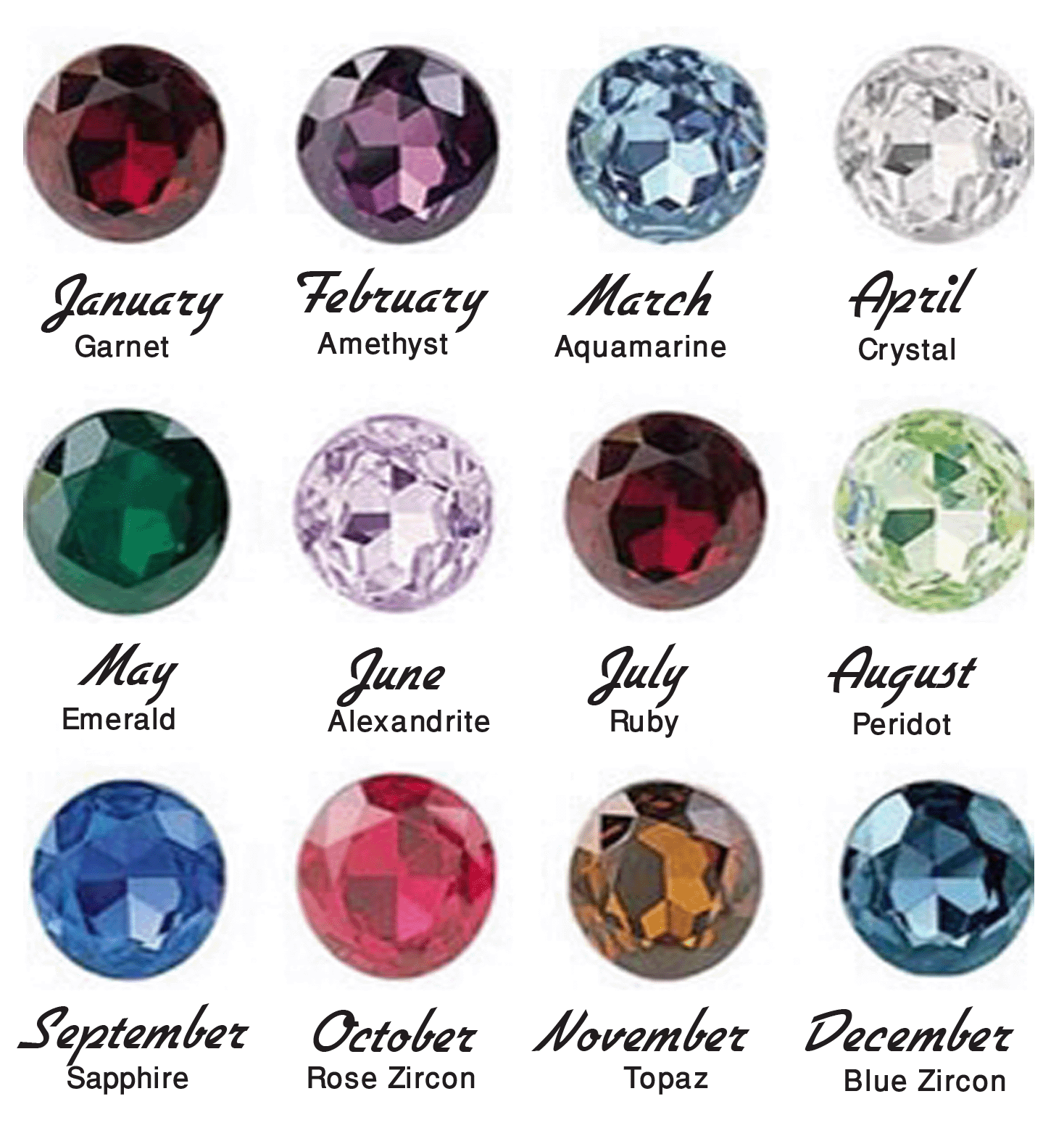
What sort of words are inherently appealing? Well, the example that comes to my mind most readily are the names of gemstones: sapphire, amethyst, aquamarine, chalcedony, emerald, obsidian, and so forth. Now, you might say these words are appealing because of their association with the gemstones they describe, but I think that's only part of it. And quite often I have no image or knowledge of a particular gemstone and I still find the word poetic.
Wilde's masterpiece of decadent poetry "The Sphinx" draws lavishly on these poetic names:On pearl and porphyry pedestalled he was too bright to look upon:For on his ivory breast there shone the wondrous ocean-emerald.
What are some of your favourite words and phrases? No, really, tell me!
Monday, July 29, 2024
The Irish Passenger at Adlestrop
My train stopped there one day. I don't know why.
The driver was some class of idiot.
It was so hot I thought that I would die.
Someone beside me had a coughing fit.
I was half-deafened by the hissing steam.
The platform had a sign, and that was it.
The whole thing was like some unholy dream.
I sat there staring out at trees and weeds
And stooks of hay. The clouds stood in the sky.
The kind of sight that no-one ever heeds
When they can just as easily pass by.
And then I heard the birds-- thousands of birds--
Hundreds of millions of birds, from everywhere
Singing a song too beautiful for words
Like choirs of angels floating in the air.
Thursday, July 25, 2024
Something Stupid
Going through your drafts folder is very diverting. At least, for me. And generates blog content!
I've long had a fascination with the phrase "the eternal debate", and the concept behind it. So much so, that I once started making a spreadsheet of how many "hits" I could find of that phrase on the internet, and which debates they referenced. And how often each debate was mentioned.
I'd completely forgotten about this. You wouldn't be up to me. (An exclusively Irish phrase meaning: "That person/group always has some scheme going." Usually understood disreputably, but not necessarily.)
As with most of my projects, I gave up and forgot about it. But here's my findings as they were when I gave up.
Analogue vs. digital 1
Arminianism vs. Calvinism 1Bernoulli vs. Leibniz 1
Blonde vs. brunette 1
Cardinal vs. ordinal data 1
Determinism vs. non-determinism 1
Einstein vs. Bohrs 1
Faith vs. science 1
Female genre vs. femininity 1
Freedom vs. security 1
God's justice vs. God's mercy 1
Ideal vs. reality 1
Ketchup vs. mustard 1
Left vs. right (toilet paper hanging) 1
Mentalists vs. idealists 1
Modernism vs. Postmodernism 1
Monism vs. dualism 1
Moral universalists vs. moral relativists 2
Nature vs. nurture 2
Optimism vs. pessimism 1
Windows vs. Mac 2
Poetry vs. prose 1
Politics vs. justice 1
Privacy vs. security 2
Quantity vs. quality 2
Rationalists vs. empiricists 1
Reason vs. faith (Islam) 1
Relatives vs. friends 1
Show vs. Tell 1
Simplicity vs. customization 1
Solidarity vs. charity 1
Sovereigntists vs. Federalists (Canada) 1
Storytelling vs. gameplay 1
Strength vs. skills 1
Tea vs. coffee 1
Thoughts vs. emotions 1
Tower vs. trough 1
Renting vs. buying 1
Bartending school vs. learning on the job 1
Kirk vs. Picard 1
Java vs. C/C+ 1
Chicken vs. pig (breakfast) 1
Urbanites vs. surburbanites 1
Liberal vs. conservative 1
Index investing vs. dividend investing 1
Men vs. women 1
Republicans vs. Demorats 1
Blackwing Technician vs. Dark cultist 1
Old money vs. new money 1
Owls vs. owlets 1
Science vs. religion 1
Knowledge vs. skill 1
Mountains vs. beach 1
Lights weights vs. heavy weights (muscle growth) 1