I'm going to put all the reviews and notices of my book Inspiration from the Saints into one blog post.
The Amazon.com and the Amazon.co.uk links (where you can buy the book) have a few reviews-- five on the first and seven on the second. Some of the reviews appear on both sites.
This very positive review appeared on the Some Definite Service blog, and contains the comment on my writing that has pleased me the most, ever. (Well, aside from something my wife posted on Facebook.)
Francis Phillips of the Catholic Herald posted this lovely review on the Herald's website, and later chose it as one of her favourite spiritual books of 2018.
Fr. Donncha Ó hAodha gave the book a warm review in the journal Position Papers.
I was interviewed about the book on the Opus Dei website, with a special focus on St. Josemaria Escriva, who is often mentioned in it.
Canadian book reviewer Steven R. McEvoy included it in his list of favourite non-fiction books read in 2018. His review can be read on the Amazon links.
Peter Costello of the Irish Catholic was less enthusiastic, but his comment that the book could have been written in 1956, while not literally true, is quite insightful, and I don't think it's necessarily a bad thing. It's the second review of the article.
Roger Buck, author of The Gentle Traditionalist and Cor Jesus Sacratissimum, talks about the book in this video, around one hour and forty-seven minutes in. (Of course, it's all worth watching!).
And a Swedish reader, Tomas, reviews the book on this very blog.
Monday, January 7, 2019
Saturday, January 5, 2019
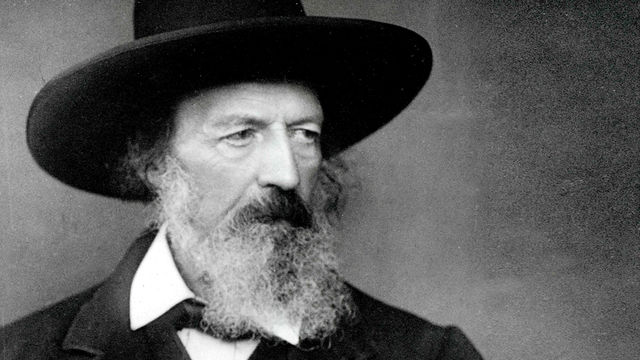
The Kraken by Lord Alfred Tennyson
Memorising poetry has been a recurring theme in my life. At first, in my teens, I didn't have to memorise it. It just stuck in my memory. The first time I became aware of this phenomenon was when I was walking home from school, aged thirteen or fourteen, and realised I knew A Prayer for my Daughter by W.B. Yeats off by heart-- a poem of eighty lines.
This ability to effortlessly memorise poetry was highly erratic-- it depended on the poem. In any case, it's long gone. At least since my twenties, I've had to make a deliberate effort, if I wanted to commit poetry to memory.
And I have done so, at different times. Every few years, I'm struck with a desire to memorize poetry, ballads, and sometimes other material. There's something very appealing in the idea of having culture in your head, carrying it about with you, having it as a part of you. Reading old books, I'm often put to shame by the familiarity of previous generations with the Bible, classics of English poetry, Shakespeare, and other cultural treasures-- not only knowing about them, but having selections from them on the tip of the tongue.
Once, some years ago, I recited "The Raven" by Edgar Allen Poe at a dinner party-- a poem of one hundred and eight lines. I got my hosts to lower the lights for the recitation, and held a single lighted candle in my hand. My plan was to blow it out before the last "Nevermore"-- unfortunately, I had some difficulty doing so, which rather ruined the effect.
The problem with memorising poetry is that, even when you've done so, it doesn't stay in your head unless you keep refreshing it. I couldn't recite "The Raven" now. So my most recent round of memorizing poetry includes a resolution to keep it fresh in my mind, by regularly reciting my repertoire (silently, for the most part). It gives me something to do in queues and at bus stops.
This rather long preamble serves to explain why I was memorizing "The Kraken" by Lord Alfred Tennyson today, despite the fact that I had memorised it before.
Come to think of it, though, I hadn't memorised it before. I'd tried to memorise it. I can remember the occasion quite vividly-- I was waiting to take the ferry to Wales, en route to England. I think I was twenty-seven. (This was the same trip on which I had the powerful experience of hearing ordinary people speak Welsh in the streets of Holyhead.) Perhaps the fact that I was making a sea crossing influenced the choice of poem. In any event, I remember struggling to learn it, despite the fact that it's only fifteen lines long. I must have forgotten about it when I got across the water.
The poem is one of Tennyson's earliest, published when he was twenty-one. It is on page six of my Collected Works. Here it is:
The Kraken
Below the thunders of the upper deep,
Far, far beneath in the abysmal sea,
His ancient, dreamless, uninvaded sleep
The Kraken sleepeth: faintest sunlights flee
About his shadowy sides; above him swell
Huge sponges of millennial growth and height;
And far away into the sickly light,
From many a wondrous grot and secret cell
Unnumbered and enormous polypi
Winnow with giant arms the slumbering green.
There hath he lain for ages, and will lie
Battening upon huge sea worms in his sleep,
Until the latter fire shall heat the deep;
Then once by man and angels to be seen,
In roaring he shall rise and on the surface die.
This ability to effortlessly memorise poetry was highly erratic-- it depended on the poem. In any case, it's long gone. At least since my twenties, I've had to make a deliberate effort, if I wanted to commit poetry to memory.
And I have done so, at different times. Every few years, I'm struck with a desire to memorize poetry, ballads, and sometimes other material. There's something very appealing in the idea of having culture in your head, carrying it about with you, having it as a part of you. Reading old books, I'm often put to shame by the familiarity of previous generations with the Bible, classics of English poetry, Shakespeare, and other cultural treasures-- not only knowing about them, but having selections from them on the tip of the tongue.
Once, some years ago, I recited "The Raven" by Edgar Allen Poe at a dinner party-- a poem of one hundred and eight lines. I got my hosts to lower the lights for the recitation, and held a single lighted candle in my hand. My plan was to blow it out before the last "Nevermore"-- unfortunately, I had some difficulty doing so, which rather ruined the effect.
The problem with memorising poetry is that, even when you've done so, it doesn't stay in your head unless you keep refreshing it. I couldn't recite "The Raven" now. So my most recent round of memorizing poetry includes a resolution to keep it fresh in my mind, by regularly reciting my repertoire (silently, for the most part). It gives me something to do in queues and at bus stops.
This rather long preamble serves to explain why I was memorizing "The Kraken" by Lord Alfred Tennyson today, despite the fact that I had memorised it before.
Come to think of it, though, I hadn't memorised it before. I'd tried to memorise it. I can remember the occasion quite vividly-- I was waiting to take the ferry to Wales, en route to England. I think I was twenty-seven. (This was the same trip on which I had the powerful experience of hearing ordinary people speak Welsh in the streets of Holyhead.) Perhaps the fact that I was making a sea crossing influenced the choice of poem. In any event, I remember struggling to learn it, despite the fact that it's only fifteen lines long. I must have forgotten about it when I got across the water.
The poem is one of Tennyson's earliest, published when he was twenty-one. It is on page six of my Collected Works. Here it is:
The Kraken
Below the thunders of the upper deep,
Far, far beneath in the abysmal sea,
His ancient, dreamless, uninvaded sleep
The Kraken sleepeth: faintest sunlights flee
About his shadowy sides; above him swell
Huge sponges of millennial growth and height;
And far away into the sickly light,
From many a wondrous grot and secret cell
Unnumbered and enormous polypi
Winnow with giant arms the slumbering green.
There hath he lain for ages, and will lie
Battening upon huge sea worms in his sleep,
Until the latter fire shall heat the deep;
Then once by man and angels to be seen,
In roaring he shall rise and on the surface die.
Memorizing the poem today, I found myself appreciating just how wonderful it is. (That's another virtue of learning poems off by heart.)
I don't know much about the legend of the Kraken. The internet tells me it's a sea monster reputed to lie off the coast of Norway and Greenland. My first encounter with the term "Kraken" was when I owned an Action Force figure of that name, as a child, though he looks more like a lizard-man than a sea monster.
"The Kraken" is sometimes called an irregular sonnet, since it is fifteen lines long, rather than the more traditional fourteen lines. Aside from the extra line, it is patterned like a Petrarchan sonnet-- a format I greatly prefer to the Shakespearean sonnet, since the closing rhymed couplet of the Shakespearean sonnet has always seemed rather glib-sounding to me.
The first thing I like about this poem is its originality. There aren't very many poems about sea-monsters. Considering that a poem can take anything as its subject, it's a shame that poets generally confine themselves to such a narrow range of subjects. I grant that some subjects can never be played out, and will always be of overwhelming interest. But surely there should be room for more variety, even when due attention has been paid to the perennial themes.
Much of the pleasure of this poem comes from its simple descriptiveness, its picture painting. It's rare for me to enjoy this-- descriptive writing is generally the sort of writing I hate above all others. However, the description in this poem is not sustained long enough to become tedious, and is pleasingly vague.
The picture itself is an awe-inspiring one. Who doesn't enjoy imagining life in the ocean depths, a world completely alien to us? It's an once soothing and exciting. The superhero film Aquaman is top of the box office as I write, attesting to the enduring appeal of this idea.
Personally, I have always loved water. I don't mean drinking it, of course; I can't stand drinking it. I mean splashing about it in it, being immersed in it. I would love to be able to live underwater.
"The Kraken" is especially appealing in its picture-painting because it envisages "the abysmal sea" where only "faintest sunlight" reaches. (Tennyson's oceanography is inaccurate, but who cares?) Perhaps this poem appeals to me so much because I am fascinated by depths, both physical and figurative, and by hidden and secret places. "Abyss" and "abysmal" are among the most exciting words in the English language. "From many a wondrous grot and secret cell" is another line that excites this particular fascination.
In fact, this poem uses a lot of exciting words. Sometimes the appeal of a poem, or much of its appeal, lies in its use of evocative words. "The Sphinx" by Oscar Wilde might be the best example of this, but "The Kraken" is a good one. For instance, the line "Unnumbered and enormous polypi" gives me an intense pleasure, simply because it uses the rare and pleasing word "polypi"-- not often drawn on by poets.
The line "Huge sponges of millennial growth and height" is another magnificently evocative line. I believe the genius of a poet can often be seen in the choice of a single word, and Tennyson's choice of millennial here is such an occasion. It's utterly inspired, and I find myself wondering how he thought of it.
"Ancient, dreamless, uninvaded sleep" is yet another line that pleases me vastly. I have written elsewhere on this blog about my fascination with sleep, though my fascination is with dreamful rather than dreamless sleep. The use of three adjectives in a row is powerful, adding a sense of grandeur and consequence.
The term "the latter fire" is strange, memorable and potent, doubtless referring to the end of the world. "Once by men and angels to be seen" is an elegant construction, taking the poem from a geological to a Biblical time-scale. It also shows how a little bit of stiffness or archaism can add to a poem: "By men and angels to be seen" is infinitely more powerful than "to be seen by men and angels."
The last line is very vivid, especially in its contrast with the rest of the poem, which has been full of references to silence and semi-darkness and sleep. "In roaring he shall rise and on the surface die."
The statement is intriguing and I've always found it rather sad. Why should the Kraken die on the surface? And why has he been sleeping so long? I'd assumed until now that this was a reference to either marine folklore or the Book of Revelation, but it doesn't seem to be. It seems to be Tennyson's own invention.
On the metaphoric level, it makes sense. Tennyson had a somewhat harsh view of nature, and saw it as something to be controlled and disciplined. His long poem cycle "Idylls of the King" opens with King Arthur taming a Britain which is seen as having degenerated into a wilderness: "The beast was more and more, and man was less and less". The vows his knights take involve a curbing of their natural instincts, and as Camelot itself falls apart, several characters suggest Arthur's demands of his knights are actually unnatural. In another poem, Tennyson famously celebrates the three virtues of "self-reverence, self-knowledge, self-control".
How typically Victorian, this concern with repression! However, perhaps the Victorians were not so far wrong. Indeed, progressives now seem to have become quite keen on repression, especially when it comes to expressions of male sexuality. Repression seems to be a concept we can't get away from, and its permanent relevance to human life might be part of what gives "The Kraken" its power. But I must admit I enjoy it more for its literal sense than for any psychological undertones which might be present in it.
Thursday, January 3, 2019
The Perspective of the Hospital Bed
Over Christmas, I was reading a book about the poetry of Louis MacNeice. The book was far too critical for my liking-- the author seemed to think MacNeice had written a handful of decent poems, at best-- but it reminded me of MacNeice's importance to me at a certain stage of my life. Indeed, he is still important to me, but there was a time when MacNeice's poetry more or less expressed my own philosophy.
MacNeice's poems dwell on the transience of life and the challenge of finding meaning in the face of death. He was an eternal agnostic, not only when it came to religion, but when it came to politics and all other grand unifying theories. Although an extremely cultured and educated man, he didn't even make a religion out of art (as many others do, being unable or unwilling to find a life philosophy anywhere else). He was as sceptical of aestheticism as of any other worldivew. However, culture was probably the closest he came to a religion.
Reading the book brought to mind, with renewed force, my own preoccupation with mortality and transience. These brute facts have always loomed over me and influenced my view of the world. How could they not, I wonder?
And yet, some people seem unaffected by these realities. Many people throw themselves into ephemeral controversies, one after another. Or become infatuated with the latest crazes in pop culture, which will be forgotten almost immediately.
It might be argued that even the enduring things are only comparatively enduring, and that, seen in proper perspective, today's headlines are no more ephemeral than some "timeless" book or poem. One may as well live for the moment: eat, drink, and be merry, for tomorrow we die.
All the same, peoples' responses are different. The inevitability of death and the transience of all things might prompt some people to hedonism, or to wring the last ounce of experience from life. But they turn my mind towards traditionalism, and a horizon that stretches beyond us into the past and the future. If our lives are short, they can at least be lived against a larger backdrop-- family history, national history, customs and traditions, old books and paintings, and so forth-- which gives them greater dignity and meaning.
I'm baffled by the impulses that drove the May 1968 protestors in France. How long did they think this frenzy of renunciation could last? Did they believe they would be eighteen forever?
One experience which has straightened these feelings is that of visiting somebody seriously ill in hospital. I've had this experience on more than one occasion. I don't want to be too autobiographical.
For good or for bad, this has become to me a test of what matters in life: how the world looks from the side of a hospital bed, visiting somebody who may never leave the ward again.
Perhaps this explains my intense dislike of silence. I cannot join the panegyrics to silence, which seem almost universal. When I think of silence, I think of sitting beside somebody seriously ill in a hospital bed, desperately trying to think of something to say, but failing. The words of Philip Larkin apply:
It becomes still more difficult to find
Words at once true and kind,
Or not untrue and not unkind.
What do you talk about, when you are talking to someone who may not live out the month, or the week?
Someone once told me a story about visiting a relative in a hospital. The relative, who spent all day on her back, said: "I feel like all l I have left is that spot on the ceiling." (If that seems too heartbreaking, she also told me she'd later had the strong impression that the deceased relative's spirit had contacted her to tell her everything was OK and not to worry about her.)
My own experience is that, at such moments, the seriousness of a person's interest in the world around them makes a big difference. With someone whose whole world was bounded by their personal relationships and their own business, there seems to be little left to say. At least, I have found it hard to say anything. But with somebody who is interested (and, even more, invested) in politics, history, culture, sport-- anything, really, which is bigger than them, which provides a horizon-- there is much more to say. And how grateful we are for it!
I realize I might be accused of selfishness here. The reader might say: so it's all about your awkwardness, your embarrassment! And indeed I have heard that the dying often want to talk about their imminent death, but that their friends and relatives discourage them for their own reasons, projecting their own fear.
Perhaps. But how much can you say about a given person's death, in a purely private context?
(What about religion, you might ask? Well, perhaps none of this applies to somebody so otherworldly that their eyes are always on Heaven. But most of us, including religious believers, are not so otherworldly, and cannot help casting "one long lingering look behind".)
Besides, my time visiting seriously ill people has made me assess life, not only from the perspective of the visitor, but the perspective of the patient. I ask myself: what if I was the person seriously ill? Forty years from now, or even tomorrow? Would I want to cling to a bundle of personal memories, of personal relationships, none of which would outlive me for very long? Or would I prefer to feel connected to something larger, right up to the end? Indeed, it seems to me that this wider perspective even gives private experiences more depth. For instance, a friendship built upon a common cause, or even upon a shared serious interest, seems so much more meaningful than a friendship built upon having a good time hanging out together.
The death of Horatio Nelson, dying at the time of his greatest triump at the Battle of Trafalgar, and crying: "Thank God I have done my duty!", seems to me rather enviable. So (in a way) do the deaths of the executed leaders of the 1916 Rising. Indeed, these were the example par excellence of a happy death when I was growing up!
A familiarity with Irish history influences my outlook in this regard. For a long stretch of Irish history-- from about the mid-nineteenth to the mind-twentieth century-- the death-bed scenes of statesmen, patriots, poets, writers, intellectuals, ecclesiastical figures, and others seemed to be almost a staple of Irish historiography, and more a triumphant curtain call than a tragedy. It didn't really matter what their particular ideals were-- it might have been revolutionary socialist, arch-reactionary, somewhere in between, or something totally different-- but they almost certainly had ideals. Now that we have passed from a heroic era, death has gone down in the world. I have attended a few humanist funerals, and always found them depressingly banal. As the notes of the last pop song fade in the crematorium, one thinks: "Well, that's it. There's nothing really left to say."
Perhaps I am completely wrong about this. Perhaps I will lie on my death-bed pondering how completely wrong I was about this all along. There is no way of knowing. But, for good or ill, I always have one eye on the perspective of the hospital bed.
MacNeice's poems dwell on the transience of life and the challenge of finding meaning in the face of death. He was an eternal agnostic, not only when it came to religion, but when it came to politics and all other grand unifying theories. Although an extremely cultured and educated man, he didn't even make a religion out of art (as many others do, being unable or unwilling to find a life philosophy anywhere else). He was as sceptical of aestheticism as of any other worldivew. However, culture was probably the closest he came to a religion.
Reading the book brought to mind, with renewed force, my own preoccupation with mortality and transience. These brute facts have always loomed over me and influenced my view of the world. How could they not, I wonder?
And yet, some people seem unaffected by these realities. Many people throw themselves into ephemeral controversies, one after another. Or become infatuated with the latest crazes in pop culture, which will be forgotten almost immediately.
It might be argued that even the enduring things are only comparatively enduring, and that, seen in proper perspective, today's headlines are no more ephemeral than some "timeless" book or poem. One may as well live for the moment: eat, drink, and be merry, for tomorrow we die.
All the same, peoples' responses are different. The inevitability of death and the transience of all things might prompt some people to hedonism, or to wring the last ounce of experience from life. But they turn my mind towards traditionalism, and a horizon that stretches beyond us into the past and the future. If our lives are short, they can at least be lived against a larger backdrop-- family history, national history, customs and traditions, old books and paintings, and so forth-- which gives them greater dignity and meaning.
I'm baffled by the impulses that drove the May 1968 protestors in France. How long did they think this frenzy of renunciation could last? Did they believe they would be eighteen forever?
One experience which has straightened these feelings is that of visiting somebody seriously ill in hospital. I've had this experience on more than one occasion. I don't want to be too autobiographical.
For good or for bad, this has become to me a test of what matters in life: how the world looks from the side of a hospital bed, visiting somebody who may never leave the ward again.
Perhaps this explains my intense dislike of silence. I cannot join the panegyrics to silence, which seem almost universal. When I think of silence, I think of sitting beside somebody seriously ill in a hospital bed, desperately trying to think of something to say, but failing. The words of Philip Larkin apply:
It becomes still more difficult to find
Words at once true and kind,
Or not untrue and not unkind.
What do you talk about, when you are talking to someone who may not live out the month, or the week?
Someone once told me a story about visiting a relative in a hospital. The relative, who spent all day on her back, said: "I feel like all l I have left is that spot on the ceiling." (If that seems too heartbreaking, she also told me she'd later had the strong impression that the deceased relative's spirit had contacted her to tell her everything was OK and not to worry about her.)
My own experience is that, at such moments, the seriousness of a person's interest in the world around them makes a big difference. With someone whose whole world was bounded by their personal relationships and their own business, there seems to be little left to say. At least, I have found it hard to say anything. But with somebody who is interested (and, even more, invested) in politics, history, culture, sport-- anything, really, which is bigger than them, which provides a horizon-- there is much more to say. And how grateful we are for it!
I realize I might be accused of selfishness here. The reader might say: so it's all about your awkwardness, your embarrassment! And indeed I have heard that the dying often want to talk about their imminent death, but that their friends and relatives discourage them for their own reasons, projecting their own fear.
Perhaps. But how much can you say about a given person's death, in a purely private context?
(What about religion, you might ask? Well, perhaps none of this applies to somebody so otherworldly that their eyes are always on Heaven. But most of us, including religious believers, are not so otherworldly, and cannot help casting "one long lingering look behind".)
Besides, my time visiting seriously ill people has made me assess life, not only from the perspective of the visitor, but the perspective of the patient. I ask myself: what if I was the person seriously ill? Forty years from now, or even tomorrow? Would I want to cling to a bundle of personal memories, of personal relationships, none of which would outlive me for very long? Or would I prefer to feel connected to something larger, right up to the end? Indeed, it seems to me that this wider perspective even gives private experiences more depth. For instance, a friendship built upon a common cause, or even upon a shared serious interest, seems so much more meaningful than a friendship built upon having a good time hanging out together.
The death of Horatio Nelson, dying at the time of his greatest triump at the Battle of Trafalgar, and crying: "Thank God I have done my duty!", seems to me rather enviable. So (in a way) do the deaths of the executed leaders of the 1916 Rising. Indeed, these were the example par excellence of a happy death when I was growing up!
A familiarity with Irish history influences my outlook in this regard. For a long stretch of Irish history-- from about the mid-nineteenth to the mind-twentieth century-- the death-bed scenes of statesmen, patriots, poets, writers, intellectuals, ecclesiastical figures, and others seemed to be almost a staple of Irish historiography, and more a triumphant curtain call than a tragedy. It didn't really matter what their particular ideals were-- it might have been revolutionary socialist, arch-reactionary, somewhere in between, or something totally different-- but they almost certainly had ideals. Now that we have passed from a heroic era, death has gone down in the world. I have attended a few humanist funerals, and always found them depressingly banal. As the notes of the last pop song fade in the crematorium, one thinks: "Well, that's it. There's nothing really left to say."
Perhaps I am completely wrong about this. Perhaps I will lie on my death-bed pondering how completely wrong I was about this all along. There is no way of knowing. But, for good or ill, I always have one eye on the perspective of the hospital bed.
Wednesday, January 2, 2019
A Very Subjective Post On Other Religions
The Catholic Church is the One True Faith. All other religions are false. The best charity Catholics can show to members of other religions is to evangelize them.
Now that I've made that clear...
Today I found myself thinking about my attitude to other religions, over the years.
I've generally taken a favourable view of religions, of whatever kind. This post is going to be completely subjective, a series of memories.
It occurred to me to write it because I remembered how much I enjoyed looking through a selection from the Bhagavad Gita which we had at home. It was very lavishly illustrated, with pictures of the god Krishna, purple-faced and many-armed. I imagine it was a free copy given out by Hare Krishnas.
I can't remember how old I was at this time, but I must have been pretty young. I believe this book played a part in forming an association in my mind between religion and exoticism. I never saw religion as dull or dreary-- quite the opposite, in fact. The fact that I was very interested in horror, science fiction and fantasy worlds probably encouraged this attitude.
Strangely, there is also an association in my mind between the Bhagavad Gita and the alcohol shelves in my local supermarket. I must have found myself thinking about one while looking at the other, or simply thinking about them both at the same time-- one image is superimposed over the other. Alcohol labels and bottles always seemed very classy and elegant to me. My brother collected them, for a short time, and I took a keen interest in his collection. I still like looking at alcohol bottles, especially bottles for spirits. I think there might even have been a connection in my mind between the distilled nature of alcohol and the "distilled" nature of a religious tradition-- since religious traditions have evolved over centuries, and have generally attained a certain depth and insight into human nature.
Another book which somehow ended up in my home was Your Right to Know by Darwin Gross, one-time leader of the rather obscure Eckankar new religious movement. Eckankar began in America in 1965. As a kid, I read everything I got my hands on, so I read Your Right to Know with some interest, though I didn't believe any of it. I found the book aesthetically appealing. It included line drawings of the "Eck Masters" of the past, who are still supposedly living in various out-of-the-way places despite being centuries old.
I also liked the photographs of Eckankar events. Although they featured robes and garland necklaces, they generally had the air of a seminar in a hotel conference room-- an atmosphere which I find quite pleasant. This, in fact, is a piquant contrast I have often noticed with regard to American religiosity. Americans are both practical and spiritual. The well-groomed, square-jawed Billy Graham in his business suit is a symbol of American spirituality that I find immensely appealing. I've never shared the common distaste for American televangelists. Perhaps it's because I come from a "smells and bells" religious tradition myself that I find the opposite paradoxically exotic (although that reaction seems unique to me). Or perhaps it's because it makes faith seem unified with ordinary life.
I must admit the banality of Eckankar rather appealed to me, as well. Although I didn't believe it for a moment, and I have no doubt it's little better than a scam, it was rather pleasant to imagine the cosmos being so cheerful and straightforward. As far as I can remember, you simply had to cut out negative thoughts and chant the sacred syllable. There was no need for stress or trauma. Such spiritual insipidness cannot satify in the long-term-- which explains why liberal religions never survive for long. They can, however, please in the short-term-- which explains why liberal religions continually come into being.
I remember Hare Krishnas chanting in their colourful robes were a fairly common sight in Dublin when I was growing up. Then they disappeared for many, many years. Then, a few years ago, a couple of them were active here again, but only for a while. In any case, I was always rather well-disposed to them, thinking they added colour to everyday life, and pointed to the transcendental.
A kid in my brother's class was a Jehovah's Witness. I was somewhat envious of him. I've always liked the idea of belonging to a minority. In fact, I can even remember envying kids with food allergies, for the same reason.
I had a few encounters with Mormons in my teens. I was very attracted to the female Mormon missionaries, finding their air of wholesomeness appealing. I admired the earnestness of Mormon missionaries in general. In my twenties I developed quite a strong interest in Mormonism, and read several books about it. Once again, I didn't take its claims seriously for a moment, but I was fascinated that such a religion should have come out of nowhere, practically speaking, in nineteenth-century America. Its claims were so startling; Jesus had come to America, the Trinity were three separate entities, God was once a man, men could become gods, and so forth. The entire thing came from the claims of a farmboy who said he had been shown some gold plates by an angel. The story of the Great Trek to Utah also intrigued me.
I have long contemplated writing a story on a Mormon theme. This is the basic idea: a female Mormon missionary loses her faith after a door-step conversation with a young cynic. She comes back the next day, shattered by the experience, telling the young cynic that she can't go home to her parents, and looking to him for guidance. The young man (who is not such a bad fellow) is alarmed at what he has done and tries to argue her back into her faith, telling her that it's as likely to be true as anything else. I think it might make a good story or play.
I was especially interested in Mormonism in my twenties, but I was also reading a lot about religion in general. I was fascinated by their traditions, rituals, histories, organization, and so forth-- the human element in them. Catholicism was the one religion I avoided reading about, perhaps out of an intuition that it would demand more from me than casual interest.
I was especially interested in Judaism. When it comes to writing about Judaism, however, I feel a little apprehensive. It's a sensitive subject in Catholicism, especially conservative Catholicism, and I am in danger of alienating somebody whatever I write. There are conservative Catholics who seem perpetually poised to shriek "anti-semitism!" if you say a critical word about the Jewish tradition, and other conservative Catholics who apparently can't bear to hear a friendly word about it. Therefore I will tread softly, and briefly.
I was fascinated by Judaism because of its antiquity, the fact that it had existed in parallel with Christianity for so many centuries, and because it appealed to me aesthetically. I liked the sound of Hebrew words and the look of Hebrew letters. I liked its intellectualism and the fact that it was so devoted to the study of sacred texts. I also admired what I saw as its temperance and sobriety, compared to all that seemed excessive and world-renouncing in other religions. History of the Jews by Paul Johnson was a book I read over and over. And that is all I will say about Judaism, except that my interest in it played a large part in leading me to Catholicism.
Eastern religions never appealed to me very much, except in their external trappings. The doctrine of annihiliation of self, of the oneness of everything, is almost the most horrible thought I can imagine. I love differences and distinctions; the thisness of this and the thatness of that. A Hindu or Buddhist might insist that my understanding of the Eastern tradition is defective, that its underlying principles do not in fact abolish difference or specialness. Well, perhaps. But this is always the impression I've received, at any rate.
Buddhism has always been the world religion which appealed to me the least, perhaps because it has been trendiest world religion in the West for many decades, or perhaps because it hardly seems like a religion at all. (I imagine that is why it has been so trendy in the West.) I do, however, understand why Buddha statues and statuettes are so popular-- the image of the meditating Buddha is very peaceful and comforting.
And so we come to Islam.
I'm almost reluctant to say anything about Islam. On the one hand, I have no desire to be counter-jihadist or anti-Muslim. I cannot find it in myself to take an antagonistic attitude to a religion of a billion people and a centuries-long tradition. On the other hand, the liberal virtue-signalling attitude towards Islam irritates me quite as much as the bullish anti-jihadist attitude. I roll my eyes at people on social media who delight in sharing stories about Middle Eastern Muslims forming protective cordons around Christian churches on Christmas Eve (which I agree is a beautiful gesture) but who stoically ignore all the less heart-warming aspects of the religion, such as the persecution of Christians in many Muslim countries.
I recently watched a YouTube video in which a Muslim academic was interviewing Roger Scruton. The Muslim academic, who was a conservative, made several positive references to his religion, and Roger Scruton himself made several polite references to it. Predictably, there were withering and hostile comments in the comment section. I find this kind of thing boorish and embarrassing. Let us at least be civil and gracious. (Although I'm a fan of Milo Yiannapoulos, I think he is too harsh on Islam. However, since he is holding the door of free speech open, perhaps it is necessary for him to be so abrasive.)
I think the sheer scale of Islam has inhibited me from investigating it. A religion such as Mormonism or Judaism, and certainly a new religious movement such as Eckankar, is manageable. Islam is overwhelming. Perhaps the most interest I've taken in Islam has been my visits to the Chester Beatty Library, a wonderful museum in Dublin, which I haunted in my twenties. (It's always the first place I recommend when people ask about places to visit in Dublin.) The calligraphy and art-work of Islam is undoubtedly beautiful, and my visit to the Islamic section always brought home to me how Abrahamic Islam is. They have many of the same stories as we do, but with crucial differences. Seeing something familiar in a different way is always a strange experience-- disorienting, but stimulating.
How about the New Age, paganism, the occult? Being a lifelong fan of horror, I've always been aware of these, but regarded them with caution. There is no time in my life when I would have dreamed of playing with a ouija board or using tarot cards. However, as with other religions, I do find all the trappings quite appealing. On the couple of occasions I've stepped into a New Age shop, I've greatly enjoyed all the sights and smells and sounds. Whenever I've listened to New Age doctrine, on other hand, it seems like the purest mush, not even having the minimal cohesion of an organised religion, however false or shallow.
I haven't mentioned the Church of England, but I wrote an entire post about that previously.
I can't finish the post without mentioning the "plain living" sects of America, such as the Pennsylvania Dutch and the Amish. Today we all live in terror of romanticizing and sentimentalizing anything, so I must avoid romanticizing these. In truth, I don't know a whole lot about them. But I find their dedication to tradition, community and plain living entirely admirable as far as it goes. I think we could all learn something from it.
Perhaps that is enough. I haven't mentioned the Orthodox, or most of the Protestant sects, or Shinto, or Confucianism, or many others. I have to stop somewhere. This blog post has been a ramble through my own memories and associations, without any vestige of a moral or purpose aside from that. I hope it has interested somebody.
Now that I've made that clear...
Today I found myself thinking about my attitude to other religions, over the years.
I've generally taken a favourable view of religions, of whatever kind. This post is going to be completely subjective, a series of memories.
It occurred to me to write it because I remembered how much I enjoyed looking through a selection from the Bhagavad Gita which we had at home. It was very lavishly illustrated, with pictures of the god Krishna, purple-faced and many-armed. I imagine it was a free copy given out by Hare Krishnas.
I can't remember how old I was at this time, but I must have been pretty young. I believe this book played a part in forming an association in my mind between religion and exoticism. I never saw religion as dull or dreary-- quite the opposite, in fact. The fact that I was very interested in horror, science fiction and fantasy worlds probably encouraged this attitude.
Strangely, there is also an association in my mind between the Bhagavad Gita and the alcohol shelves in my local supermarket. I must have found myself thinking about one while looking at the other, or simply thinking about them both at the same time-- one image is superimposed over the other. Alcohol labels and bottles always seemed very classy and elegant to me. My brother collected them, for a short time, and I took a keen interest in his collection. I still like looking at alcohol bottles, especially bottles for spirits. I think there might even have been a connection in my mind between the distilled nature of alcohol and the "distilled" nature of a religious tradition-- since religious traditions have evolved over centuries, and have generally attained a certain depth and insight into human nature.
Another book which somehow ended up in my home was Your Right to Know by Darwin Gross, one-time leader of the rather obscure Eckankar new religious movement. Eckankar began in America in 1965. As a kid, I read everything I got my hands on, so I read Your Right to Know with some interest, though I didn't believe any of it. I found the book aesthetically appealing. It included line drawings of the "Eck Masters" of the past, who are still supposedly living in various out-of-the-way places despite being centuries old.
I also liked the photographs of Eckankar events. Although they featured robes and garland necklaces, they generally had the air of a seminar in a hotel conference room-- an atmosphere which I find quite pleasant. This, in fact, is a piquant contrast I have often noticed with regard to American religiosity. Americans are both practical and spiritual. The well-groomed, square-jawed Billy Graham in his business suit is a symbol of American spirituality that I find immensely appealing. I've never shared the common distaste for American televangelists. Perhaps it's because I come from a "smells and bells" religious tradition myself that I find the opposite paradoxically exotic (although that reaction seems unique to me). Or perhaps it's because it makes faith seem unified with ordinary life.
I must admit the banality of Eckankar rather appealed to me, as well. Although I didn't believe it for a moment, and I have no doubt it's little better than a scam, it was rather pleasant to imagine the cosmos being so cheerful and straightforward. As far as I can remember, you simply had to cut out negative thoughts and chant the sacred syllable. There was no need for stress or trauma. Such spiritual insipidness cannot satify in the long-term-- which explains why liberal religions never survive for long. They can, however, please in the short-term-- which explains why liberal religions continually come into being.
I remember Hare Krishnas chanting in their colourful robes were a fairly common sight in Dublin when I was growing up. Then they disappeared for many, many years. Then, a few years ago, a couple of them were active here again, but only for a while. In any case, I was always rather well-disposed to them, thinking they added colour to everyday life, and pointed to the transcendental.
A kid in my brother's class was a Jehovah's Witness. I was somewhat envious of him. I've always liked the idea of belonging to a minority. In fact, I can even remember envying kids with food allergies, for the same reason.
I had a few encounters with Mormons in my teens. I was very attracted to the female Mormon missionaries, finding their air of wholesomeness appealing. I admired the earnestness of Mormon missionaries in general. In my twenties I developed quite a strong interest in Mormonism, and read several books about it. Once again, I didn't take its claims seriously for a moment, but I was fascinated that such a religion should have come out of nowhere, practically speaking, in nineteenth-century America. Its claims were so startling; Jesus had come to America, the Trinity were three separate entities, God was once a man, men could become gods, and so forth. The entire thing came from the claims of a farmboy who said he had been shown some gold plates by an angel. The story of the Great Trek to Utah also intrigued me.
I have long contemplated writing a story on a Mormon theme. This is the basic idea: a female Mormon missionary loses her faith after a door-step conversation with a young cynic. She comes back the next day, shattered by the experience, telling the young cynic that she can't go home to her parents, and looking to him for guidance. The young man (who is not such a bad fellow) is alarmed at what he has done and tries to argue her back into her faith, telling her that it's as likely to be true as anything else. I think it might make a good story or play.
I was especially interested in Mormonism in my twenties, but I was also reading a lot about religion in general. I was fascinated by their traditions, rituals, histories, organization, and so forth-- the human element in them. Catholicism was the one religion I avoided reading about, perhaps out of an intuition that it would demand more from me than casual interest.
I was especially interested in Judaism. When it comes to writing about Judaism, however, I feel a little apprehensive. It's a sensitive subject in Catholicism, especially conservative Catholicism, and I am in danger of alienating somebody whatever I write. There are conservative Catholics who seem perpetually poised to shriek "anti-semitism!" if you say a critical word about the Jewish tradition, and other conservative Catholics who apparently can't bear to hear a friendly word about it. Therefore I will tread softly, and briefly.
I was fascinated by Judaism because of its antiquity, the fact that it had existed in parallel with Christianity for so many centuries, and because it appealed to me aesthetically. I liked the sound of Hebrew words and the look of Hebrew letters. I liked its intellectualism and the fact that it was so devoted to the study of sacred texts. I also admired what I saw as its temperance and sobriety, compared to all that seemed excessive and world-renouncing in other religions. History of the Jews by Paul Johnson was a book I read over and over. And that is all I will say about Judaism, except that my interest in it played a large part in leading me to Catholicism.
Eastern religions never appealed to me very much, except in their external trappings. The doctrine of annihiliation of self, of the oneness of everything, is almost the most horrible thought I can imagine. I love differences and distinctions; the thisness of this and the thatness of that. A Hindu or Buddhist might insist that my understanding of the Eastern tradition is defective, that its underlying principles do not in fact abolish difference or specialness. Well, perhaps. But this is always the impression I've received, at any rate.
Buddhism has always been the world religion which appealed to me the least, perhaps because it has been trendiest world religion in the West for many decades, or perhaps because it hardly seems like a religion at all. (I imagine that is why it has been so trendy in the West.) I do, however, understand why Buddha statues and statuettes are so popular-- the image of the meditating Buddha is very peaceful and comforting.
And so we come to Islam.
I'm almost reluctant to say anything about Islam. On the one hand, I have no desire to be counter-jihadist or anti-Muslim. I cannot find it in myself to take an antagonistic attitude to a religion of a billion people and a centuries-long tradition. On the other hand, the liberal virtue-signalling attitude towards Islam irritates me quite as much as the bullish anti-jihadist attitude. I roll my eyes at people on social media who delight in sharing stories about Middle Eastern Muslims forming protective cordons around Christian churches on Christmas Eve (which I agree is a beautiful gesture) but who stoically ignore all the less heart-warming aspects of the religion, such as the persecution of Christians in many Muslim countries.
I recently watched a YouTube video in which a Muslim academic was interviewing Roger Scruton. The Muslim academic, who was a conservative, made several positive references to his religion, and Roger Scruton himself made several polite references to it. Predictably, there were withering and hostile comments in the comment section. I find this kind of thing boorish and embarrassing. Let us at least be civil and gracious. (Although I'm a fan of Milo Yiannapoulos, I think he is too harsh on Islam. However, since he is holding the door of free speech open, perhaps it is necessary for him to be so abrasive.)
I think the sheer scale of Islam has inhibited me from investigating it. A religion such as Mormonism or Judaism, and certainly a new religious movement such as Eckankar, is manageable. Islam is overwhelming. Perhaps the most interest I've taken in Islam has been my visits to the Chester Beatty Library, a wonderful museum in Dublin, which I haunted in my twenties. (It's always the first place I recommend when people ask about places to visit in Dublin.) The calligraphy and art-work of Islam is undoubtedly beautiful, and my visit to the Islamic section always brought home to me how Abrahamic Islam is. They have many of the same stories as we do, but with crucial differences. Seeing something familiar in a different way is always a strange experience-- disorienting, but stimulating.
How about the New Age, paganism, the occult? Being a lifelong fan of horror, I've always been aware of these, but regarded them with caution. There is no time in my life when I would have dreamed of playing with a ouija board or using tarot cards. However, as with other religions, I do find all the trappings quite appealing. On the couple of occasions I've stepped into a New Age shop, I've greatly enjoyed all the sights and smells and sounds. Whenever I've listened to New Age doctrine, on other hand, it seems like the purest mush, not even having the minimal cohesion of an organised religion, however false or shallow.
I haven't mentioned the Church of England, but I wrote an entire post about that previously.
I can't finish the post without mentioning the "plain living" sects of America, such as the Pennsylvania Dutch and the Amish. Today we all live in terror of romanticizing and sentimentalizing anything, so I must avoid romanticizing these. In truth, I don't know a whole lot about them. But I find their dedication to tradition, community and plain living entirely admirable as far as it goes. I think we could all learn something from it.
Perhaps that is enough. I haven't mentioned the Orthodox, or most of the Protestant sects, or Shinto, or Confucianism, or many others. I have to stop somewhere. This blog post has been a ramble through my own memories and associations, without any vestige of a moral or purpose aside from that. I hope it has interested somebody.
Sunday, December 23, 2018
Despair and Delight
First came despair, slowly and steadily--
The falling dusk of mental agony
From helpless losses and from hope gone sour,
The weight of time compressed within an hour,
The bright shop windows mocking: "You alone
Pass through this pageant with a heart of stone."
Then came delight-- delight!-- so suddenly,
And I loved everything that I could see
For being what it was. The winter air
Was giddy as a child, and did not care
One whit for me. My soul filled with intense
Joy at the world's sublime indifference.
The falling dusk of mental agony
From helpless losses and from hope gone sour,
The weight of time compressed within an hour,
The bright shop windows mocking: "You alone
Pass through this pageant with a heart of stone."
Then came delight-- delight!-- so suddenly,
And I loved everything that I could see
For being what it was. The winter air
Was giddy as a child, and did not care
One whit for me. My soul filled with intense
Joy at the world's sublime indifference.
Friday, December 21, 2018
A Smoking Hot Babe for Christmas (Again)
A repeat of a blog post from two years ago. I don't really have anything to add, except that I must admit that the sixth line of this poem makes me wince, on account of its clumsiness. The rest of it is brilliant, though.
I do so much rhapsodising about tradition on this blog, how can I fail to observe the blog's own traditions? One of which is posting 'The Burning Babe' by St. Robert Southwell at Christmas. (OK, maybe I've only done it once before, but twice makes it a tradition.)
St. Robert Southwell was a Jesuit priest in the reign of Queen Elizabeth who came to England (having been trained on the continent) fully expecting to be martyred-- as indeed he was. He was also a poet, and wrote this classic poem.
I love sentimentality, and I love Christmas sentimentality. But there's something even better than sentimentality, and that's awe. Fire imagery has always appealed to me, and this poem is full of it, as the title indicates.
It's also (in my view) a rare non-tedious example of a conceit. A conceit, as the reader may well know already, is an extended metaphor. Conceits are the reason I find John Donne and the Metaphysical poets nigh-on unreadable. However, it works here, perhaps because the poem is a short one.
The theological density of the poem is also very impressive. I wonder if anyone has ever compiled an anthology of poetry by saints?
As I in hoary winter’s night stood shivering in the snow,
Surpris’d I was with sudden heat which made my heart to glow;
And lifting up a fearful eye to view what fire was near,
A pretty Babe all burning bright did in the air appear;
Who, scorched with excessive heat, such floods of tears did shed
As though his floods should quench his flames which with his tears were fed.
“Alas!” quoth he, “but newly born, in fiery heats I fry,
Yet none approach to warm their hearts or feel my fire but I!
My faultless breast the furnace is, the fuel wounding thorns,
Love is the fire, and sighs the smoke, the ashes shame and scorns;
The fuel Justice layeth on, and Mercy blows the coals,
The metal in this furnace wrought are men’s defiled souls,
For which, as now on fire I am to work them to their good,
So will I melt into a bath to wash them in my blood.”
With this he vanish’d out of sight and swiftly shrunk away,
And straight I calléd unto mind that it was Christmas day.
Thursday, December 20, 2018
Thoughts on The Wizard of Oz
Over the last couple of days, I've finally watched The Wizard of Oz, a movie that the Library of Congress has declared to be the most watched film of all time, according to various sources. The film's penetration into our cultural bloodstream is extraordinary, so it's quite surprising it took me this long to see it.
There were various reasons for this. One is that it's a musical, and I rarely watch musicals. I hate "clever" lyrics-- lyrics which are supposedly (or even actually) clever in a self-congratulatory, smarmy sort of way-- and musicals nearly always have "clever" lyrics. This kind of thing makes me cringe, to put it mildly:
I'd be tender, I'd be gentle
And awful sentimental
Regarding love and art
I'd be friends with the sparrows
And the boy that shoots the arrows
If I only had a heart.
A book about the poetry of Louis Macneice, which I've just started reading, quotes these lines as central to his poetic themes:
Let all these ephemeral things
Much of the pleasure of a "timeless classic" like The Wizard of Oz (or Groundhog Day) is that, in itself, it seems like a shelter against transience. Somebody, somewhere, is watching the movie right now. And, in a sense, Dorothy is never going to leave the farm ever, ever, again; because the movie ends with that declaration. For a moment, the dizziness of perpetual change is overcome, and we can enjoy the illusion (or even, comparatively speaking, the reality) of the unending.
There were various reasons for this. One is that it's a musical, and I rarely watch musicals. I hate "clever" lyrics-- lyrics which are supposedly (or even actually) clever in a self-congratulatory, smarmy sort of way-- and musicals nearly always have "clever" lyrics. This kind of thing makes me cringe, to put it mildly:
I'd be tender, I'd be gentle
And awful sentimental
Regarding love and art
I'd be friends with the sparrows
And the boy that shoots the arrows
If I only had a heart.
Yuk.
Another reason I avoided the film is the song "Over the Rainbow", which-- along with "Puff, the Magic Dragon", "Eleanor Rigby", and various other songs-- I've always placed in the "unbearably sad" category.
However, I found myself intrigued by the movie over the last few years, for various reasons.
The main reason is my ever-deepening interest in "dream" stories-- stories which turn out to have been "all just a dream", or which may a dream, or which exist in a plane of reality which is dream-like in some way. Inception is one of my favourite movies of all time, for this reason.
It's ironic, because I used to hate such stories-- hate, hate, hate them.
When I was a child, I went through a brief phase of being frightened to go to sleep because I didn't want to dream. I wasn't frightened of bad dreams. I was frightened of any dreams. I was frightened of losing control of my mind and believing that an illusion was real. I'm surprised this doesn't frighten more people-- it's scary, when you think about it.
I can remember, not so long ago, being almost disgusted by philosophical questions like: "How can we know this is waking life and not a dream?" We just know, I thought. And that's still my attitude, on the most straightforward level. However, the issue seems increasingly interesting and important to me on what I might call a metaphorical level; not, "Is this a dream, or is it real?", but rather, "To what extent is reality itself dream-like?" Or even: "Which is ultimately more real, the dream or the reality?"
Another source of my interest in this theme is my general Counter-Enlightenment bias. I think society should respect all those elements of the human condition which we might call irrational, non-rational, or trans-rational. I tend to group them under the term "the dark side of the moon"; and, interestingly, there is a rumour (dismissed by the band, and undoubtedly nonsense) that the Pink Floyd album of that title was written to synchronize with the Wizard of Oz!
The Wizard of Oz is a framed narrative, which also interests me. Framed narratives are similar to dream stories; there are different "layers" of reality involved.
Finally, I was interested in the film because of its sheer cultural impact-- all the quotations and allusions from the film which are scattered through other movies, books, songs and in many other places.
So how did I like the film?
I found it very moving. In fact, my eyes were wet for much of its running time. I generally don't care about acting, but Judy Garland's performance is extraordinary-- the vulnerability and yearning written on her face all through the film is heart-melting.
It certainly has its flaws. The plot doesn't make a whole lot of sense. This might be excused considering it's all just a dream, but one expects stories to have a certain internal coherence, if only to be dramatically satisfying. I would argue that The Wizard of Oz lacks this-- the plot holes are gaping.
I also dislike the flimsiness and silliness of its invented world. Oz looks very dull, for all its colour and spectacle. It's too sleek, featureless, plastic. It looks like a theme park.
Why then, has the film proved so successful? Surely because of its emotional impact, and the depth of its themes.
One of the themes of the film is the contrast between the mundane and the exotic, the familiar and the faraway. Dorothy longs to be "somewhere over the rainbow", and gets her wish. However, once she reaches Oz, she finds herself longing for Kansas again. (Some people point out that this is handled quite clumsily, since her immediate motive for running away is that her dog is about to be euthanized by a cruel neighbour; not a bad reason, really, and not actually stemming from any dissatisfaction with her home, though such dissatisfaction is shown earlier.) When she wakes up, she comes to the conclusion that "there's no place like home". Even while still in Oz, she says: "If I ever go looking for my heart's desire again, l won't look any further than my own backyard, because if it isn't there I never really lost it to begin with."
This is the message of many of my favourite fictions. For instance, it's the central message of my favourite movie, Groundhog Day.
I've always been a lover of the familiar and the ordinary. Indeed, I sometimes worry that my love of the familiar and the ordinary is pathological, and disqualifies me as a commentator upon the human condition. Aside from anything else, I'm a profoundly insular person. I've never really liked stories set in an unfamiliar times or places or environments. I have no interest in stories set in the ancient world, or South-East Asia, or the demi-monde. I like stories set in English-speaking suburbia.
On the other hand, as one might guess from my Counter-Enlightenment affinities, I also craved stories of the supernatural, otherworldly, fantastic, and so forth. To put it in terms of this movie, the only two places that really interest me are Kansas and Oz.
And it also occurs to me that Kansas and Oz, between them, form a complete spiritual reflection of America. Is America the picket fence or the yellow brick road? The answer is surely "both". Perhaps this is true of every country and every people. But I think it's particularly true of America. The same country that is endlessly blasted for being utterly insular, philistine, small-minded etc. etc. is the country that sent men to the moon and cherishes in its soul the unquenchable thirst for new frontiers.
In the end, however, it could be that we are all drawn to one more than the other. Roger Ebert says this in his review of the film:
The ending has always seemed poignant to me. Dorothy is back in Kansas, but the color has drained from the film, and her magical friends are mundane once again. “The land of Oz wasn't such a bad place to be stuck in,” decided young Terry McMillan, discontented with her life in Michigan. “It beat the farm in Kansas.”
My view is completely the opposite. I find the farm in Kansas much more appealing than Oz, on every level: atmospherically, visually, imaginatively, and in every other way.
The last scene of the movie is the one that touches me most profoundly. In fact, it touched me even before I'd seen it, since I'd heard about it so often. Dorothy wakes up, home in Kansas. Her aunt and uncle are there, and so are the farmhands who bear such a striking resemblance to the Tin Man, Lion and Scarecrow, and so is the travelling showman who looks like the Wizard of Oz himself.
The scene also seems poignant to me, but for completely the opposite reason to Roger Ebert's. "I'm not going to leave here ever, ever again, because I love you all", says Dorothy. But she is going to leave...and even if she doesn't, they are all going to leave her, whether through death or simply through passing out of her life. And her devoted little dog Toto will almost certainly be the first to go.
This is the sadness that hangs over every story. The resolution is only temporary. There's no place like home...but is there any such place as home, after all? Even if we stay in the same place, things are not going to stay the same. Is home itself, perhaps, nothing but a dream?
This transience, of course, applies to everything. It's not just parents, spouses and children who die. Everything passes. The world that seems so familiar and reliable to us will one day be as historical as medieval England or ancient China. All the rhythms and routines that we take for granted will pass way.
How much does this preoccupy you, dear reader? It preoccupies me very much, and it always has, even when I was a child. Clive Barker, the horror writer, says that he was nostalgic for childhood as it was happening. I can identify with that. There has literally been no time in my life that I have not been haunted by the transience of everything.
As I've admitted on this blog recently, and as I've previously mentioned in this very post, I really do wonder if this preoccupation is morbid, abnormal, excessive. It obviously informs my view of the world; my traditionalism and my nationalism, to a great extent, are a response to it.
But I'm not alone. Many thinkers and writers have expressed the craving for permanence, for something that can endure against the flux. For instance, there is Edmund Burke's haunting criticism of constitutional upheavel:
By this unprincipled facility of changing the state as often, and as much, and in as many ways as there are floating fancies or fashions, the whole chain and continuity of the commonwealth would be broken. No one generation could link with the other. Men would become little better than the flies of summer.
Yeats, like many other poets, contrasts the permanence of art with the transience of life:
Once out of nature I shall never take
Another reason I avoided the film is the song "Over the Rainbow", which-- along with "Puff, the Magic Dragon", "Eleanor Rigby", and various other songs-- I've always placed in the "unbearably sad" category.
However, I found myself intrigued by the movie over the last few years, for various reasons.
The main reason is my ever-deepening interest in "dream" stories-- stories which turn out to have been "all just a dream", or which may a dream, or which exist in a plane of reality which is dream-like in some way. Inception is one of my favourite movies of all time, for this reason.
It's ironic, because I used to hate such stories-- hate, hate, hate them.
When I was a child, I went through a brief phase of being frightened to go to sleep because I didn't want to dream. I wasn't frightened of bad dreams. I was frightened of any dreams. I was frightened of losing control of my mind and believing that an illusion was real. I'm surprised this doesn't frighten more people-- it's scary, when you think about it.
I can remember, not so long ago, being almost disgusted by philosophical questions like: "How can we know this is waking life and not a dream?" We just know, I thought. And that's still my attitude, on the most straightforward level. However, the issue seems increasingly interesting and important to me on what I might call a metaphorical level; not, "Is this a dream, or is it real?", but rather, "To what extent is reality itself dream-like?" Or even: "Which is ultimately more real, the dream or the reality?"
Another source of my interest in this theme is my general Counter-Enlightenment bias. I think society should respect all those elements of the human condition which we might call irrational, non-rational, or trans-rational. I tend to group them under the term "the dark side of the moon"; and, interestingly, there is a rumour (dismissed by the band, and undoubtedly nonsense) that the Pink Floyd album of that title was written to synchronize with the Wizard of Oz!
The Wizard of Oz is a framed narrative, which also interests me. Framed narratives are similar to dream stories; there are different "layers" of reality involved.
Finally, I was interested in the film because of its sheer cultural impact-- all the quotations and allusions from the film which are scattered through other movies, books, songs and in many other places.
So how did I like the film?
I found it very moving. In fact, my eyes were wet for much of its running time. I generally don't care about acting, but Judy Garland's performance is extraordinary-- the vulnerability and yearning written on her face all through the film is heart-melting.
It certainly has its flaws. The plot doesn't make a whole lot of sense. This might be excused considering it's all just a dream, but one expects stories to have a certain internal coherence, if only to be dramatically satisfying. I would argue that The Wizard of Oz lacks this-- the plot holes are gaping.
I also dislike the flimsiness and silliness of its invented world. Oz looks very dull, for all its colour and spectacle. It's too sleek, featureless, plastic. It looks like a theme park.
Why then, has the film proved so successful? Surely because of its emotional impact, and the depth of its themes.
One of the themes of the film is the contrast between the mundane and the exotic, the familiar and the faraway. Dorothy longs to be "somewhere over the rainbow", and gets her wish. However, once she reaches Oz, she finds herself longing for Kansas again. (Some people point out that this is handled quite clumsily, since her immediate motive for running away is that her dog is about to be euthanized by a cruel neighbour; not a bad reason, really, and not actually stemming from any dissatisfaction with her home, though such dissatisfaction is shown earlier.) When she wakes up, she comes to the conclusion that "there's no place like home". Even while still in Oz, she says: "If I ever go looking for my heart's desire again, l won't look any further than my own backyard, because if it isn't there I never really lost it to begin with."
This is the message of many of my favourite fictions. For instance, it's the central message of my favourite movie, Groundhog Day.
I've always been a lover of the familiar and the ordinary. Indeed, I sometimes worry that my love of the familiar and the ordinary is pathological, and disqualifies me as a commentator upon the human condition. Aside from anything else, I'm a profoundly insular person. I've never really liked stories set in an unfamiliar times or places or environments. I have no interest in stories set in the ancient world, or South-East Asia, or the demi-monde. I like stories set in English-speaking suburbia.
On the other hand, as one might guess from my Counter-Enlightenment affinities, I also craved stories of the supernatural, otherworldly, fantastic, and so forth. To put it in terms of this movie, the only two places that really interest me are Kansas and Oz.
And it also occurs to me that Kansas and Oz, between them, form a complete spiritual reflection of America. Is America the picket fence or the yellow brick road? The answer is surely "both". Perhaps this is true of every country and every people. But I think it's particularly true of America. The same country that is endlessly blasted for being utterly insular, philistine, small-minded etc. etc. is the country that sent men to the moon and cherishes in its soul the unquenchable thirst for new frontiers.
In the end, however, it could be that we are all drawn to one more than the other. Roger Ebert says this in his review of the film:
The ending has always seemed poignant to me. Dorothy is back in Kansas, but the color has drained from the film, and her magical friends are mundane once again. “The land of Oz wasn't such a bad place to be stuck in,” decided young Terry McMillan, discontented with her life in Michigan. “It beat the farm in Kansas.”
My view is completely the opposite. I find the farm in Kansas much more appealing than Oz, on every level: atmospherically, visually, imaginatively, and in every other way.
The last scene of the movie is the one that touches me most profoundly. In fact, it touched me even before I'd seen it, since I'd heard about it so often. Dorothy wakes up, home in Kansas. Her aunt and uncle are there, and so are the farmhands who bear such a striking resemblance to the Tin Man, Lion and Scarecrow, and so is the travelling showman who looks like the Wizard of Oz himself.
The scene also seems poignant to me, but for completely the opposite reason to Roger Ebert's. "I'm not going to leave here ever, ever again, because I love you all", says Dorothy. But she is going to leave...and even if she doesn't, they are all going to leave her, whether through death or simply through passing out of her life. And her devoted little dog Toto will almost certainly be the first to go.
This is the sadness that hangs over every story. The resolution is only temporary. There's no place like home...but is there any such place as home, after all? Even if we stay in the same place, things are not going to stay the same. Is home itself, perhaps, nothing but a dream?
This transience, of course, applies to everything. It's not just parents, spouses and children who die. Everything passes. The world that seems so familiar and reliable to us will one day be as historical as medieval England or ancient China. All the rhythms and routines that we take for granted will pass way.
How much does this preoccupy you, dear reader? It preoccupies me very much, and it always has, even when I was a child. Clive Barker, the horror writer, says that he was nostalgic for childhood as it was happening. I can identify with that. There has literally been no time in my life that I have not been haunted by the transience of everything.
As I've admitted on this blog recently, and as I've previously mentioned in this very post, I really do wonder if this preoccupation is morbid, abnormal, excessive. It obviously informs my view of the world; my traditionalism and my nationalism, to a great extent, are a response to it.
But I'm not alone. Many thinkers and writers have expressed the craving for permanence, for something that can endure against the flux. For instance, there is Edmund Burke's haunting criticism of constitutional upheavel:
By this unprincipled facility of changing the state as often, and as much, and in as many ways as there are floating fancies or fashions, the whole chain and continuity of the commonwealth would be broken. No one generation could link with the other. Men would become little better than the flies of summer.
Yeats, like many other poets, contrasts the permanence of art with the transience of life:
Once out of nature I shall never take
My bodily form from any natural thing,
But such a form as Grecian goldsmiths make
Of hammered gold and gold enamelling
But such a form as Grecian goldsmiths make
Of hammered gold and gold enamelling
To keep a drowsy Emperor awake;
Or set upon a golden bough to sing
To lords and ladies of Byzantium
Of what is past, or passing, or to come.
Or set upon a golden bough to sing
To lords and ladies of Byzantium
Of what is past, or passing, or to come.
A book about the poetry of Louis Macneice, which I've just started reading, quotes these lines as central to his poetic themes:
Let all these ephemeral things
Be somehow permanent like the swallow's tangent wings.
The quest for permanence amidst ephemeral things is, I think, one of the reasons human beings are so drawn to art-- both its creation and its consumption. I know it's true in my case. Writing itself is a reassuring act, given how (comparatively) permanent written words are compared to spoken words, or to the flux of ordinary life. Then there is the hope that one's written words will survive and be re-read.
Much of the pleasure of a "timeless classic" like The Wizard of Oz (or Groundhog Day) is that, in itself, it seems like a shelter against transience. Somebody, somewhere, is watching the movie right now. And, in a sense, Dorothy is never going to leave the farm ever, ever, again; because the movie ends with that declaration. For a moment, the dizziness of perpetual change is overcome, and we can enjoy the illusion (or even, comparatively speaking, the reality) of the unending.
Subscribe to:
Posts (Atom)